Leave Your Message
0%

Picking the right Breaker Disconnect Switch can protect your equipment, make maintenance easier, and help you avoid costly downtime. But if you're buying globally, the market gets crowded fast. Voltage ratings, breaking capacity, enclosure design, terminal quality—they all vary. This guide looks at ten notable options for industrial, commercial, and infrastructure jobs. It's about practical buying evidence, not shiny catalog language.

Real installations tend to expose the little things. A switch sitting in a dusty factory needs much better enclosure protection than one in a clean control room. You also want clear labeling, secure padlocking, a handle that moves smoothly, and enough room to wire everything without a fight. So the evaluation looks at manufacturer datasheets, published test results, certification info, warranty terms, and distributor support. Brands like Schneider Electric, Siemens, Eaton, ABB, and Socomec might show up, but regional availability can shift quickly. Always check the latest documentation.

There's no universal winner here. A compact model might fit a narrow panel, yet leave you with limited cable space. A premium unit may last longer, but blow past a small project's budget. Those trade-offs deserve honest attention. Buyers should confirm local electrical requirements and installation conditions with qualified professionals. Standards and approvals differ by market, so a familiar logo alone isn't enough. Verify the exact product code.

Some specs are still easy to mix up. Short-circuit ratings, utilization categories, and isolation functions are not interchangeable terms. The final choice should match the system design, expected fault level, the environment, and your maintenance routine. This list is a careful starting point—but product data and regional approvals need ongoing review. Real-world judgment still matters.
Top 10 Breaker Disconnect Switches for Global Buyers?

Market Scope: What Makes a Breaker Disconnect Switch Globally Competitive

A globally competitive Circuit Breaker Disconnect Switch must fit more than one electrical market. Buyers should check rated voltage, current, short-circuit performance, pole configuration, and local conformity requirements. A device suitable for a dry factory may fail in coastal humidity or dusty workshops. Details matter.

In practical panel inspections, reliable switches show clear position markings, secure terminals, and smooth mechanical operation. Installers also value accessible handles and enough space for insulated tools. Thermal cycling can expose weak materials, while salt spray testing reveals poor corrosion protection. Independent test reports strengthen purchasing decisions, but paperwork alone cannot replace field experience. Some suppliers publish impressive ratings without explaining installation conditions.

Global competitiveness also depends on supply stability, replacement parts, multilingual instructions, and responsive technical support. A buyer in Southeast Asia may need compact dimensions, while a European integrator may prioritize documented compliance and enclosure compatibility. Not always. The lowest price can create higher costs through rewiring, downtime, or delayed approvals. A practical top-ten evaluation should compare lifecycle reliability, testing depth, delivery consistency, and application fit rather than ranking products by specifications alone. Even experienced engineers should revisit their assumptions when climate, grid conditions, or maintenance skills change.

Core Ratings Explained: Voltage, Current, Icu, Ics, and SCCR Selection Data

Choosing among the top 10 Breaker Disconnect Switches requires more than comparing ampere ratings. Voltage must match the system’s line-to-line voltage and grounding arrangement. A 400 V motor feeder needs equipment rated for at least that operating voltage. The rated current should cover the continuous load, ambient temperature, and conductor limits. It is not always equal to the trip-setting value.

Short-circuit ratings demand closer attention. Icu is the ultimate short-circuit breaking capacity under IEC 60947-2. Ics is the service short-circuit capacity after testing, often expressed as a percentage of Icu. A switch showing 50 kA Icu but only 25 kA Ics may not deliver the same recovery performance. NFPA 70, 2023 edition, Section 110.9, requires interrupting ratings to meet the available fault current at the installation point. Check the study, not a sales table.

SCCR applies mainly to the complete assembly, especially in North American control panels. UL 508A Supplement SB explains how component ratings contribute to panel SCCR. For example, a panel exposed to 25 kA prospective fault current needs an assembly SCCR of at least 25 kA. IEC buyers should review Icu, Ics, and coordination separately. A neat spreadsheet can still be wrong. Cable length, transformer impedance, altitude, and enclosure temperature can change the selection. I would also verify terminal capacity and isolation suitability before accepting any of the ten candidates.

Standards Checklist: IEC 60947-3, UL 98, and Regional Compliance Requirements

For global buyers, a Disconnect Switch should be judged by verified compliance, not appearance or price. IEC 60947-3 is a key reference for switches, disconnectors, and switch-disconnectors. Check the rated operational voltage, current, utilization category, and short-circuit performance. These details must match the intended load, enclosure, and installation method.

UL 98 is important for equipment entering markets that recognize this North American standard. Review the certification scope, pole arrangement, horsepower rating, terminal temperature, and enclosure construction. Do not guess. The marking should clearly identify ratings and conditions of use. A field engineer should also compare the switch with the upstream protective device and available fault current. An impressive label is not enough.

Regional rules may add requirements for installation, conductor sizing, ingress protection, isolation distance, or certification marks. Confirm whether the project requires IEC-based documentation, North American certification, or national approvals before purchasing. Ask for test reports, declarations, wiring diagrams, and production traceability. Check the label. I have seen technically sound products delayed because documents used inconsistent ratings. That matters.

For a practical top-ten comparison, score each model for IEC 60947-3 alignment, UL 98 status, regional acceptance, SCCR, enclosure rating, mechanical endurance, terminal safety, environmental resistance, service access, and documentation quality. A neat spreadsheet can still mislead when local installation rules are ignored. Final selection should be reviewed by a qualified electrical professional familiar with the destination market.

Top 10 Breaker Disconnect Switches for Global Buyers — Standards Checklist: IEC 60947-3, UL 98, and Regional Compliance Requirements
Rank Generic Switch Configuration Typical Poles Typical Rated Current Typical Rated Voltage Common Utilization Category Short-Circuit / Withstand Requirement Enclosure Protection Primary Standard Checklist Regional Compliance Considerations Typical Application
1 Heavy-duty enclosed fusible disconnect switch 3-pole or 4-pole 100–800 A Up to 690 V AC AC-23A / AC-23B Verify the manufacturer’s tested conditional short-circuit current and fuse coordination. Do not infer SCCR from current rating alone. IP54–IP66; NEMA 3R–4X options IEC 60947-3UL 98 where applicable North America generally requires a listed device, approved fuses, field wiring compatibility, and marked SCCR. IEC markets require rated operational voltage, current, utilization category, and coordination data. Industrial machinery, motor control centers, large HVAC equipment, process skids
2 Compact non-fusible load-break disconnect 2-pole, 3-pole, or 4-pole 16–125 A Up to 690 V AC AC-22A / AC-23A depending on rating Confirm rated short-time withstand current or conditional short-circuit performance stated in the test documentation. IP20–IP65; finger-safe terminal covers available IEC 60947-3IEC 60529 for IP code For control panels, verify clearances, creepage distances, terminal temperature limits, and enclosure rating for the installation environment. Control panels, distribution boards, small motors, commercial equipment
3 Solar PV DC isolator disconnect 2-pole, 4-pole, or multi-string configuration 16–63 A per circuit Up to 1,500 V DC DC-21B or application-specific DC switching category Use only a device specifically tested for the PV system voltage, current, polarity, and DC fault conditions. IP65–IP66; UV-resistant outdoor enclosure preferred IEC 60947-3IEC 60947-1PV-specific national rules Australia, Europe, and many other markets require DC-rated isolation equipment. North American installations may require listed PV disconnect equipment and compliance with the applicable electrical code. Rooftop PV arrays, string combiner boxes, battery-coupled solar systems
4 Motor-rated enclosed disconnect switch 3-pole 30–400 A Up to 600 V AC AC-23A; motor circuit suitability must be verified separately Check the marked withstand or SCCR value and compatibility with the upstream protective device and motor branch circuit. IP55–IP66; NEMA 3, 3R, 4, or 4X options IEC 60947-3UL 98 where applicableLocal machinery rules A disconnect may provide isolation without being a motor controller or overload relay. Confirm the required motor disconnect location, visibility, and accessibility. Pumps, compressors, fans, conveyors, machine tools
5 Changeover or transfer disconnect switch 3-pole or 4-pole 40–630 A Up to 690 V AC AC-22A / AC-23A Verify the tested switching sequence, interlocking arrangement, and short-circuit withstand rating. IP40–IP65; padlockable handles common IEC 60947-3Transfer equipment rules Neutral switching depends on the earthing system and local code. Emergency, standby, and utility sources may require mechanically or electrically interlocked positions. Generator changeover, dual Power Supplies, bypass-isolation systems
6 Door-coupled panel disconnect switch 3-pole or 4-pole 25–250 A Up to 690 V AC AC-22A / AC-23A Confirm door interlock performance, defeat provisions, and the panel assembly’s declared short-circuit rating. IP31–IP55 when installed in a suitable enclosure IEC 60947-3IEC 61439 for assemblies The disconnect rating does not automatically certify the complete panel. The enclosure, busbars, wiring, and protective devices may require separate assembly verification. Industrial control cabinets, distribution panels, automation systems
7 Fusible safety disconnect switch 2-pole, 3-pole, or 4-pole 30–600 A Up to 600 V AC AC-22A / AC-23A Use the specified fuse class, maximum fuse size, and tested short-circuit combination. Fuse rejection or interchangeability must be checked. Indoor and outdoor versions; IP54–IP66 or NEMA 3R–4X IEC 60947-3UL 98 where applicableFuse standard compatibility Fuse dimensions and classifications differ by region. Confirm voltage, interrupting rating, current rating, and touch-safe requirements for the selected fuse system. Service entrances, feeders, HVAC, industrial branch circuits
8 Emergency-stop isolation disconnect 3-pole or 4-pole 16–160 A Up to 690 V AC AC-23A where load switching is required Verify the switching duty, visible position indication, lockout capability, and coordination with emergency-stop control circuits. IP65–IP67; high-visibility handle options IEC 60947-3IEC 60204-1 for machinery An isolator is not automatically an emergency-stop device. Emergency-stop functions may require separate control, stopping, reset, and risk-assessment requirements. Packaging machines, production lines, test equipment, service isolation points
9 Battery energy-storage DC disconnect 2-pole or 4-pole 125–800 A Up to 1,500 V DC DC-21B or application-specific DC category Verify DC fault current, battery chemistry, pre-charge requirements, polarity, arc interruption, and tested system-level short-circuit performance. IP54–IP66; corrosion-resistant outdoor options IEC 60947-3Battery-system requirementsRegional energy-storage rules Energy-storage installations may require additional system certification, fire-safety measures, temperature limits, and separation distances beyond the disconnect switch standard. Battery racks, energy-storage containers, telecom power systems, UPS battery banks
10 Marine and corrosive-environment disconnect switch 2-pole, 3-pole, or 4-pole 20–250 A Up to 690 V AC; DC ratings vary AC-22A / AC-23A or a specified DC category Confirm salt-mist resistance, insulation performance, fault withstand, and the complete installed assembly’s certification. IP66–IP67; NEMA 4X; UV- and corrosion-resistant materials IEC 60947-3IEC 60529Marine or site-specific rules Marine, offshore, chemical, and coastal installations may require additional material, vibration, ingress, EMC, or classification approvals. Marine power distribution, wastewater plants, coastal infrastructure, chemical processing
Regional Compliance Checklist for Global Buyers
Region or Market Core Compliance Focus Buyer Verification Points Common Markings or Documentation
European Union and EEA Low-voltage equipment requirements and applicable harmonized standards Verify conformity assessment, rated operational voltage and current, utilization category, poles, terminal capacity, IP rating, and installation instructions. CE marking where applicable, EU Declaration of Conformity, test reports, technical documentation
United Kingdom UK product and electrical installation requirements Confirm the required UK conformity route, English documentation, voltage and frequency ratings, and site-specific installation rules. UKCA or other applicable marking, declaration of conformity, product test documentation
United States UL product certification, National Electrical Code requirements, and local authority approval Confirm listing or certification for the intended use, voltage, current, enclosure, fuse type, SCCR, wire range, and environmental location. Recognized certification mark, product marking, installation instructions, SCCR and wiring information
Canada Canadian electrical product certification and applicable installation code Check certification accepted by the authority having jurisdiction, conductor compatibility, enclosure requirements, and short-circuit ratings. Canadian certification mark, test report, rating label, installation documentation
Australia and New Zealand Electrical equipment safety rules and local wiring regulations Verify the applicable product standard, AC or DC switching category, outdoor UV performance, isolation requirements, and registration obligations where required. Regulatory compliance documentation, supplier declaration, test reports, product marking
Middle East and Africa Adopted IEC standards, national authority requirements, and project specifications Confirm ambient temperature, dust and heat exposure, IP or NEMA enclosure rating, corrosion resistance, cable entry system, and local approval requirements. IEC test report, conformity certificate, project approval documents, nameplate data
Asia-Pacific National standards frequently based on or aligned with IEC requirements Check whether the importing country requires local certification, national deviations, specific markings, language, plug or terminal requirements, and accredited laboratory reports. National certification where applicable, IEC test report, local-language instructions, declaration documents
Buyer note: The ratings shown are representative procurement ranges for common disconnect-switch configurations, not specifications for a particular product. Final selection must be based on the exact manufacturer datasheet, tested utilization category, AC or DC duty, fault-current coordination, enclosure rating, ambient conditions, conductor compatibility, and the electrical code enforced at the installation site. IEC 60947-3 and UL 98 are product standards; they do not replace local installation, machinery, fire-safety, energy-storage, or authority-approval requirements.

Enclosure and Safety Metrics: IP Ratings, Isolation, Lockout, and Pollution Degree

Top 10 Breaker Disconnect Switches for Global Buyers?

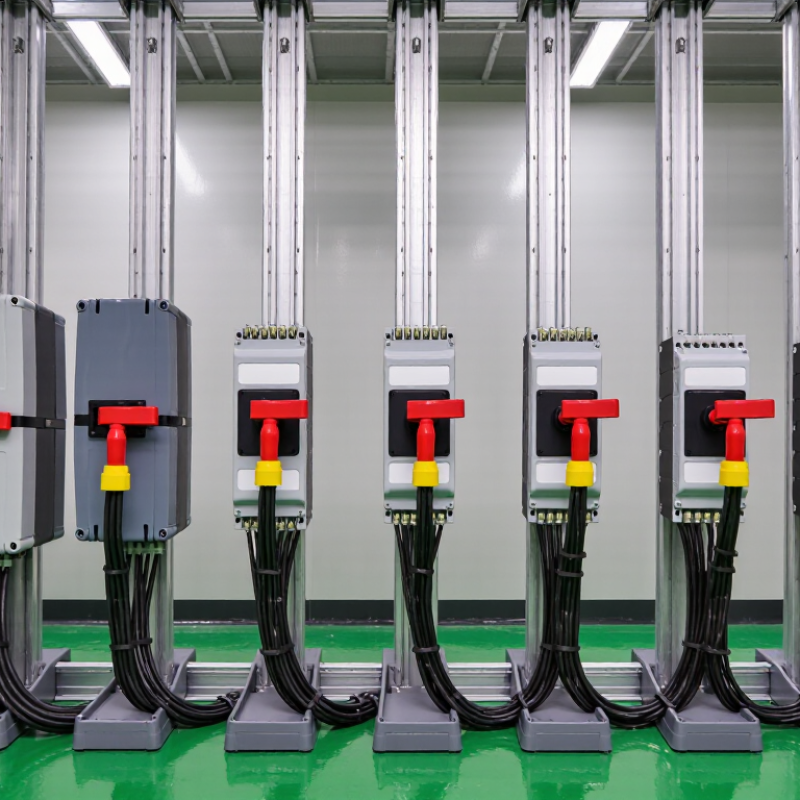
A reliable breaker disconnect switch starts with its enclosure, not its price. In dusty workshops, an IP65 or IP66 enclosure can protect against particles and water jets. IP ratings do not measure corrosion resistance or chemical exposure. Coastal sites may need additional material checks. A Local Disconnect Switch should also remain reachable, clearly marked, and protected from accidental operation.

Isolation performance deserves careful verification. A switch suitable for isolation should provide a dependable separation point and clear position indication. Lockout capability matters during maintenance, especially when several technicians work nearby. Look for a robust locking hole that accepts common safety locks. Pollution Degree 3 may suit industrial areas with conductive contamination, but the installation environment must be assessed honestly. A clean test room can hide real field problems.

Tips: Compare the rated insulation voltage, short-circuit withstand rating, IP level, and terminal capacity. Request test reports and installation instructions before purchasing. Check whether the enclosure remains sealed after cable glands are fitted. That detail is often missed. Also inspect the handle in gloves and low light. I have seen technically strong switches become difficult to use after poor mounting. Not every “weatherproof” claim explains condensation, dust buildup, or aging seals. Leave room for doubt, then verify the evidence.

Top 10 Switch Types Compared by Poles, Amperage, Mounting, and Application

Top 10 Breaker Disconnect Switches for Global Buyers

A practical comparison starts with poles, not appearance. Single-pole and double-pole switches commonly serve 120–240 V branch circuits, often between 15 and 100 amperes. Three-pole models suit motors and three-phase equipment, while four-pole versions also isolate the neutral. Fused disconnects add short-circuit protection; non-fused units provide isolation only. Rotary isolators offer clear visual positioning. Enclosed safety switches tolerate dust, moisture, and accidental contact. DIN-rail units fit compact control cabinets. Panel-mounted and door-coupled designs support larger distribution boards. These are ten useful types, although several overlap.

Amperage must match the conductor, load, fault level, and local code. A 32-ampere Electric Disconnect Switch may fit a small machine, but a 400-ampere enclosed unit belongs in a very different installation.

IEC 60947-3 addresses switching and disconnecting performance, while NFPA 70 Article 404 covers disconnecting means in many North American applications. Mounting changes field work. DIN rail installation is fast; wall mounting needs stronger hardware and weather protection. Always confirm AC voltage, utilization category, short-circuit rating, and terminal capacity.

Demand is becoming harder to predict. The International Energy Agency’s Electricity 2024 report expects global electricity demand to grow by about 3.4% annually through 2026. The U.S. Energy Information Administration also projects rising electricity use from data centers and industrial facilities. That supports broader demand for compact and high-current disconnects. Still, a neat “top ten” ranking can mislead. I have seen buyers select amperage first and discover inadequate pole configuration later. The better habit is to compare the drawing, enclosure, mounting space, and maintenance access together. Procurement teams should request test certificates and installation instructions, not only a catalog number.

Global Buyer Matrix: Price, Certifications, Lead Time, Warranty, and Supply Risk

Top 10 Breaker Disconnect Switches for Global Buyers?

A global buyer matrix should compare more than unit price. In project sourcing, I check the delivered cost, not only the quotation. A low-priced switch may require costly adapters, inspections, or replacement parts. Certifications must match the installation market and voltage class. Request current certificates, test reports, and product traceability. Do not rely on a logo printed on a brochure.

Lead time needs practical verification. Ask for production capacity, shipping terms, and a recent delivery record. A stated ten-day lead time may exclude testing and export handling. Warranty terms also deserve close reading. Check coverage length, response time, spare-part access, and who pays return freight. Supply risk rises when one factory, one port, or one material source controls the order. I score each of the top ten products from one to five, but my scoring is not perfect. Political changes, storms, and sudden demand can still disrupt a careful plan.

Tips: Build a matrix with price, certification fit, lead time, warranty, and supply risk. Ask for two references from similar installations. Keep a qualified backup supplier. Require written confirmation before placing the purchase order. A small sample order can reveal packaging weakness, labeling errors, and inconsistent dimensions. Check twice.

Top 10 Breaker Disconnect Switches for Global Buyers

Global Buyer Matrix: Price, Certifications, Lead Time, Warranty, and Supply Risk

The chart compares ten anonymized market profiles using a 0–100 buyer score. Higher scores indicate better price competitiveness, broader certification coverage, shorter lead time, longer warranty, and lower supply risk. The benchmark reflects commonly published global market ranges for low-voltage breaker disconnect switches: approximately USD 30–350 per unit, 2–16 weeks lead time, 1–5 years warranty coverage, and certification combinations such as IEC, UL, CE, and CCC.

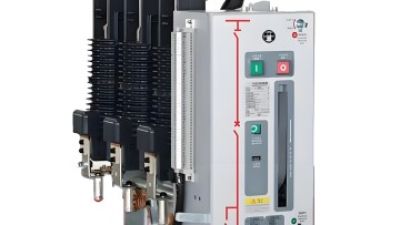
China VTD9-12D Indoor High-Voltage AC Vacuum Circuit Breaker: Features, Applications & Supplier Guide

The China VTD9-12D indoor high-voltage AC vacuum circuit breaker is designed for dependable switching and protection in three-phase electrical systems operating at 50/60Hz and 12kV. Using vacuum interruption technology, it can close and carry current under normal operating conditions, interrupt specified over-currents, and respond effectively to abnormal situations such as short circuits. Its indoor structure supports stable performance in controlled electrical rooms, while its compact design helps make efficient use of installation space. Reliable mechanical operation and practical maintenance requirements make it suitable for modern medium-voltage distribution systems.

The VTD9-12D can be applied in industrial and mining facilities, photovoltaic and wind power installations, residential distribution networks, and urban complexes. It can serve as an important control and protection component for transformers, feeders, motors, and other medium-voltage equipment. When selecting a suitable model, users should consider rated voltage, current capacity, short-circuit interruption requirements, operating frequency, installation conditions, and coordination with other protective devices. These factors help ensure safe and efficient system operation.

As a China-based factory product, the VTD9-12D can be supplied for different project requirements and electrical configurations. A professional supplier should provide clear technical documentation, consistent manufacturing quality, inspection support, and responsive assistance before and after delivery. Confirming specifications, testing standards, delivery schedules, and customization options in advance can help customers choose a circuit breaker that matches their facility’s operating environment and long-term maintenance plans.

FAQS

Why must the switch voltage match the electrical system?

The voltage rating must meet or exceed the system’s line-to-line voltage. A 400 V motor feeder needs equipment rated for at least 400 V. Grounding arrangements also matter. Do not rely on appearance.

How should the current rating be selected?

Choose a rating that covers continuous load, ambient temperature, and conductor limits. It may differ from the trip-setting value. Terminal capacity must also match the conductors.

What does Icu mean?

Icu is the ultimate short-circuit breaking capacity under IEC 60947-2. It shows the maximum tested fault current the device can interrupt. It is not the entire selection decision.

What does Ics mean?

Ics is the service short-circuit capacity after testing. It is often shown as a percentage of Icu. A device rated 50 kA Icu and 25 kA Ics needs careful review.

What is SCCR, and when is it important?

SCCR mainly applies to complete assemblies, especially control panels. The assembly rating must meet or exceed the available fault current. For 25 kA exposure, the panel needs at least 25 kA SCCR.

How can available fault current affect selection?

Check the electrical study at the installation point. Transformer impedance, cable length, and system arrangement can change the result. A neat spreadsheet can still be wrong.

Which standards and documents should buyers review?

Review IEC 60947-3, UL 98, and applicable regional requirements. Check test reports, declarations, wiring diagrams, labels, and production traceability. Missing documents can delay an otherwise suitable project.

What details should be compared between disconnect switches?

Compare voltage, current, utilization category, short-circuit ratings, enclosure protection, and mechanical endurance. Also check terminal safety, environmental resistance, and service access. The lowest price may not be the best value.

Why should a qualified electrical professional review the final choice?

Local rules may affect conductor sizing, isolation distance, enclosure protection, and certification. A professional can compare the switch with upstream protection and fault current. I would verify everything twice.

Conclusion

Selecting the right Breaker Disconnect Switch for global applications requires more than comparing price and amperage. Buyers should evaluate voltage, continuous current, Icu, Ics, and SCCR to ensure the switch can safely handle normal operation and fault conditions. Compliance with IEC 60947-3, UL 98, and relevant regional requirements is also essential for approval and dependable installation. Enclosure protection, including IP rating, pollution degree suitability, visible isolation, and lockout capability, directly affects safety and service life.

This guide compares ten common switch types by pole configuration, current range, mounting method, and intended application. It also presents a practical global buyer matrix covering cost, certifications, lead time, warranty terms, and supply risk. By balancing electrical performance, environmental protection, regulatory compliance, and supply continuity, purchasers can select a Breaker Disconnect Switch that provides reliable isolation, supports maintenance safety, and remains suitable for diverse international projects.
Emily

Emily

Emily is a dedicated marketing professional at Ningbo Tianan Imp. & Exp. Co., Ltd., part of the comprehensive Ningbo Tianan group that includes several key subsidiaries. With a deep understanding of the company's diverse product offerings, which range from power technology to automotive parts, she......
Previous Top 10 Capacitor Cabinet Suppliers for Global Buyers