
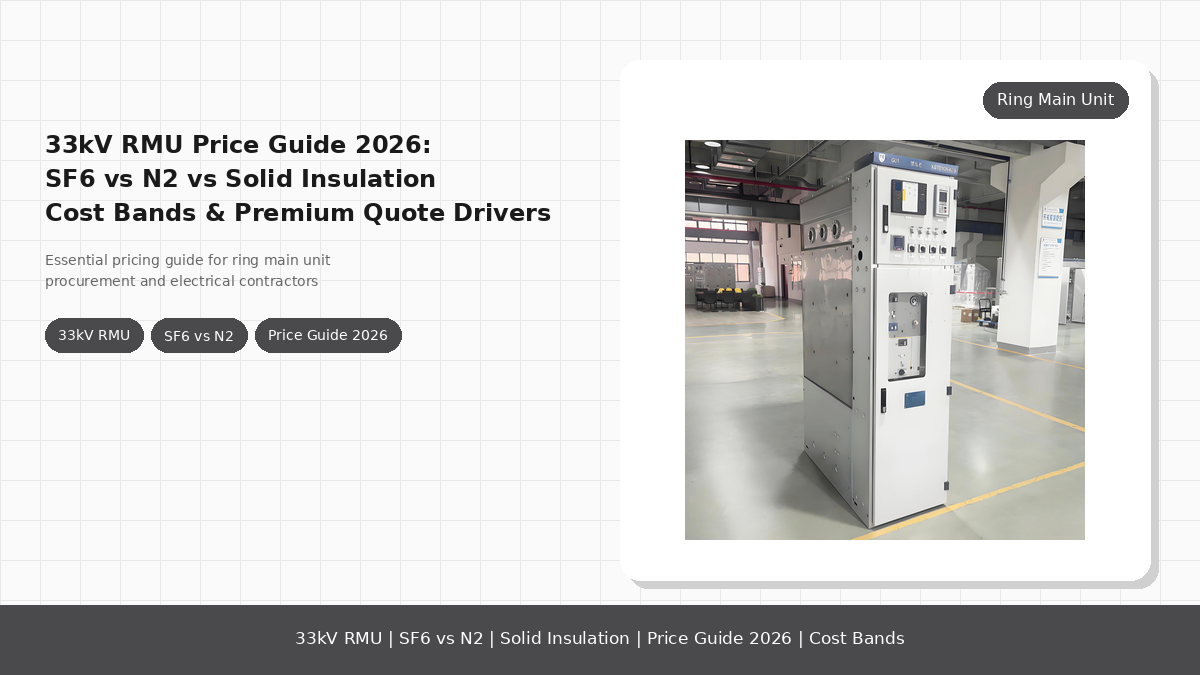
Three insulation technologies, three price bands, seven premium quote drivers — and the lifecycle costs the sticker price never covers.
TL;DR — 33kV RMU pricing in 2026, in five points
- Three insulation technologies sit at three distinct price bands in 2026: SF6 gas-insulated at the lower-to-middle band, N2 or dry-air gas-insulated at the middle band, solid insulation at the upper band.
- Seven premium quote drivers explain most of the price variation between competing 33kV RMU quotations: short-circuit withstand rating, certification depth, smart-monitoring interface, modularity, environmental qualification, spare-parts commitment, and supplier track-record.
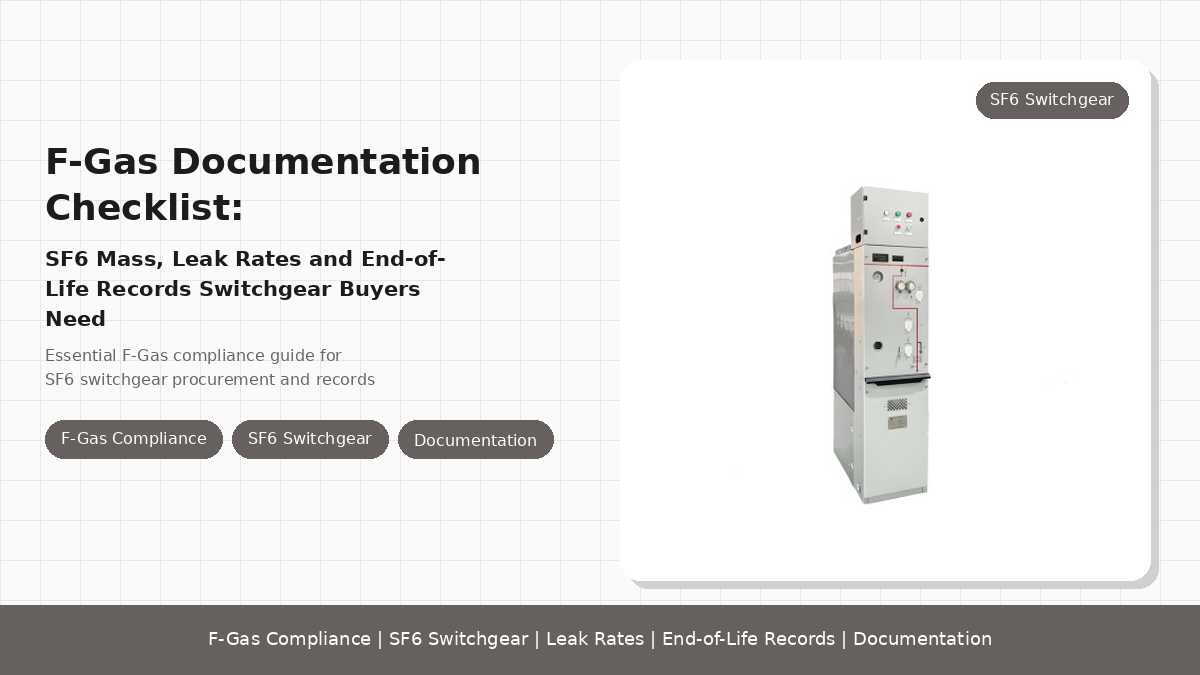
- EU F-gas Regulation 2024/573 steadily raises the lifecycle cost of SF6-insulated units in European deployments through leak reporting and end-of-life recovery obligations.
- Lifecycle TCO components the sticker price does not cover include SF6 leak detection, end-of-life gas recovery, freight, installation, and operator training — combined adding roughly 20 to 40 percent to the delivered-and-installed cost.
- Decision rule of thumb: SF6 for legacy project continuity, N2/dry-air for EU and high-compliance new builds, solid insulation for 30-year utility anchor projects where monitoring burden matters.
If you have been watching 33kV ring main unit quotations climb, widen, or split apart over the last 18 months, you are not imagining it — the market is moving under the buyer's feet. The 33kV RMU price guide for 2026 is not a single number with a tolerance band; it is three price bands for three insulation technologies, plus seven premium quote drivers that move the sticker price by anywhere from the lower end of one band to the upper end of the next. Reading the market requires holding both dimensions in your head at once.
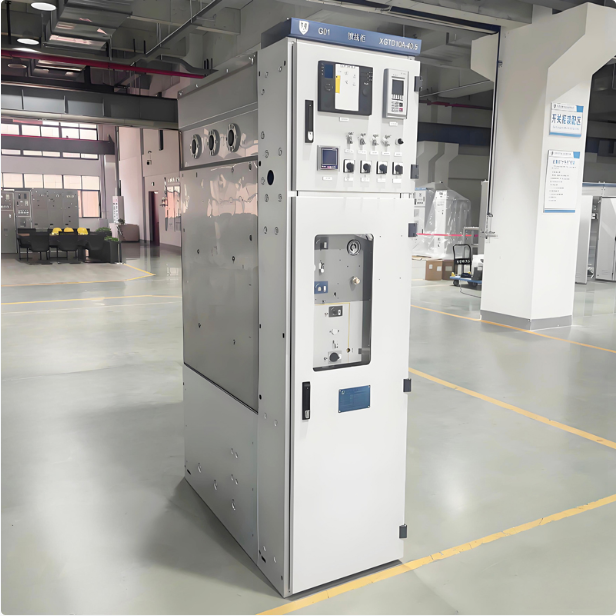
This is the framework I take utility and infrastructure buyers through on the first call at Ningbo Tianan Imp. & Exp. Co., Ltd., where I have spent 15+ years exporting power equipment across Asia, Africa, the Middle East, and South America. The price bands and quote drivers below are the same ones I use to evaluate whether a 33kV RMU quotation is well-priced, under-spec'd, or hiding costs the buyer will only see at commissioning. If you want the broader switchgear range by class, the ring main unit class switchgear category page is where the lineup starts; the XGN/XGTD10-40.5 gas-insulated switchgear for 33kV systems page is the reference product class; and to get your 33kV RMU quotation matched against your spec, the contact page is where to send the tender sheet.
Why 33kV RMU Pricing Is Suddenly a 2026 Hot Topic
Three forces converged on the 33kV RMU market between 2024 and 2026 to make pricing suddenly volatile — and any buyer walking into the market without the three forces in mind is paying for the surprise on the back end. Understanding the drivers is the precondition for reading any quotation that crosses the desk in 2026.
The three converging forces:
- EU F-gas Regulation 2024/573 tightened. The revised regulation raises the cost of SF6 ownership in European deployments through mandatory leak detection reporting, recovery obligations at end of life, and progressively rising levy rates on SF6 stock. The regulation is the single largest reason SF6-insulated quotations have moved within their band over the last 18 months and why N2 and solid-insulation alternatives have become commercially viable in EU projects that previously defaulted to SF6.
- Solid insulation cost premium is falling. Solid insulation was a premium option through the early 2020s; it is now within reach of the upper end of the SF6 band for the same short-circuit and current rating. The narrowing gap is what allows 30-year utility anchor projects to seriously consider solid insulation as the long-term ownership story.
- Smart-monitoring is becoming a default. IEC 61850 and digital substation monitoring interfaces are now typically expected in any 33kV RMU quotation for utility-scale work, and the interface option is one of the seven premium quote drivers buyers most often miss in the first pass.
Because these three forces are reshaping both the band placement and the band separation, the 2026 price guide cannot be a single number — it has to be a three-by-three matrix: three insulation technologies against three reference price bands, with the seven premium drivers stacked on top. The rest of this article walks through that matrix in the order a tendering specialist would read it.
The Three Insulation Technologies and Their 2026 Price Bands
The three insulation technologies for 33kV ring main units sit at three distinct price bands in 2026, and the right band for a project is a function of the regulatory environment, the project lifetime, and the monitoring burden the buyer is willing to absorb. Below is the comparison matrix I start every 33kV RMU discussion with.
| Insulation technology | Sticker price band (per bay) | Lifecycle TCO | Regulatory risk | Best fit |
|---|---|---|---|---|
| SF6 gas-insulated (XGN/XGTD10-40.5 class) | Lower-to-middle band | Middle — SF6 monitoring + end-of-life recovery adds 5 to 15 percent in EU; less outside EU | Rising in EU; stable elsewhere | Legacy project continuity, non-EU utilities, mid-scale infrastructure |
| N2 or dry-air gas-insulated | Middle band | Lower — no F-gas reporting obligation | Low — broadly accepted by all current regulations | EU new builds, high-compliance markets, mixed-vintage projects |
| Solid insulation (epoxy / resin-encapsulated) | Upper band | Lowest — no SF6, no F-gas, no field gas handling | None — fully SF6-free | 30-year utility anchor projects, premium infrastructure, monitoring-critical sites |
Because the three bands are real and the gap between them is widening in 2026, a buyer who knows only one band is overpaying or underspec'ing — depending on which band they anchored to. The IEC 62271-200 high-voltage switchgear standard and the IEEE C37 series anchor the test and rating framework both bands sit on, so the bands are comparable on the same electrical envelope. The CIGRE technical brochures on SF6 alternatives provide the third-party endorsement that the new bands are technically validated, not just commercially re-positioned.
The 7 Premium Quote Drivers Buyers Most Often Miss
The seven premium quote drivers below are the variables that move a 33kV RMU quotation from the lower end of one band to the upper end of the next — and they are the variables buyers most often miss on the first-pass price comparison. Knowing which driver is producing the premium is the buyer's first defense against either overpaying or accepting a thin quotation that fails at commissioning.
| Quote driver | What it is | Impact on price | Question to ask the supplier |
|---|---|---|---|
| Short-circuit withstand rating | 25 kA vs 31.5 kA vs 40 kA peak rating | High — drives the conductor and enclosure | "What peak and short-time rating does this unit carry at 33kV?" |
| Certification depth | Type test certificate scope (IEC 62271-200 only, or + IEEE C37 + GB/DL) | Medium — drives the test lab work and documentation | "Which standards does the type test certificate cover, and is the lab accredited?" |
| Smart-monitoring interface | IEC 61850, digital I/O, condition monitoring sensors | Medium — drives the protection relay and SCADA integration | "What protocols does the protection relay speak out of the box?" |
| Modularity | Plug-in extension bays vs fixed welded configuration | Medium-high — drives the mechanical design and spare flexibility | "Can I add a fourth bay on site without returning to factory?" |
| Environmental qualification | IP rating, ambient temperature range, humidity, altitude derating | Medium — drives enclosure and gas sealing | "What IP rating, ambient temperature, and altitude is the unit rated for?" |
| Spare-parts commitment | 10-year vs 20-year spare-parts guarantee | Low-medium — drives supplier's stocking obligation | "What spare-parts commitment comes with this quotation, in writing?" |
| Supplier track-record and warranty | Reference projects at 33kV, warranty terms, post-shipment support | Low-medium — drives supplier selection premium | "Can you share two reference customers at this voltage class?" |
Because the seven drivers move price independently, the buyer who reads a 33kV RMU quotation without checking all seven is comparing one band of price against a different band of spec — and that is the most common cause of the "low quote, bad outcome" pattern in 33kV RMU sourcing. The question column on the right is the buyer's one-page checklist to walk through on every quotation.
Lifecycle TCO: What the Sticker Price Does Not Cover
The lifecycle TCO components below are the costs the 33kV RMU sticker price typically does not cover, and they add up to roughly 20 to 40 percent of the delivered-and-installed lifecycle cost in a typical project. A buyer who sources on sticker price alone ends up paying the difference in commissioning, monitoring, and end-of-life phases.
The four lifecycle TCO components:
- SF6 leak detection and reporting. For SF6-insulated units in the EU, mandatory leak detection at intervals defined by the F-gas Regulation 2024/573 (annual above 10 kg SF6 charge, periodic below). Detection is a recurring line item that the buyer absorbs over the unit's life, not at the purchase date.
- End-of-life gas recovery and disposal. At decommissioning, SF6 must be recovered by certified personnel and disposed under the F-gas Regulation. Solid-insulation units do not have this line item. This is one of the largest hidden TCO differences between the SF6 and solid-insulation bands over a 30-year project lifetime.
- Freight and inland transport. 33kV RMU panels are heavy, bulky, and require specialized handling. Inland transport from port to substation can run in the lower double-digit percentage of the sticker price in remote substation projects, and the buyer typically absorbs this on the local side rather than the supplier.
- Installation, commissioning, and operator training. Field installation, protection relay commissioning, and operator training are typically separate line items and run in the mid-single-digit percentage of the sticker price per project. Operators who are not trained on the specific RMU class produce 2 to 3 times the in-service failure rate during the first year.
Because the four lifecycle components add up across a 30-year project lifetime, the buyer who sources on sticker price alone is choosing a cheaper day-one cost and a more expensive 30-year cost — and that is the inversion that the EU F-gas Regulation is specifically designed to surface into the procurement decision. The US EPA SF6 emission reporting framework provides the parallel reference for North American deployments where the regulatory pressure is lower today but rising over the same 30-year horizon.
Quote Red Flags: How to Read a 33kV RMU Quotation Like a Tendering Specialist
The five quote red flags below are the patterns that mark a 33kV RMU quotation as too cheap to be safe, and the question column on the right is the buyer's last-line check before locking the order. Reading a quotation like a tendering specialist means knowing which red flag corresponds to which of the seven premium drivers from Step 2.
| Red flag | What it typically means | Risk level | Question to ask the supplier |
|---|---|---|---|
| Quotation well below the published band | Skipped one or more of the seven premium drivers | High | "Which of the seven drivers did you exclude from the quotation?" |
| Vague type-test certificate | In-house test report rather than accredited lab certificate | High | "Which lab issued the type test certificate, and is the lab accredited?" |
| No spare-parts commitment in writing | Buyer pays premium after commissioning when a part fails | Medium | "What is the written spare-parts commitment, in years and SKU scope?" |
| Protection relay brand not specified | Supplier may substitute an off-brand relay to save cost | Medium | "What is the relay brand and model, and is it on the approved list?" |
| Short warranty or vague warranty terms | Supplier anticipating early-life failures and pricing them out | Low-medium | "What does the warranty cover, for how long, and what is excluded?" |
Because the red flags map one-to-one onto the seven premium drivers from the previous section, the buyer who walks both lists on the same quotation usually catches the discrepancy on the first pass. The single most common pattern across the utility buyers we work with is the well-below-band quotation — the one that comes in 15 to 20 percent below the next competing offer. Almost every one of those quotations skipped the modularity driver, the spare-parts commitment, or the certification depth driver, and the savings that produced the lower sticker price was the buyer's first TCO bill, not the supplier's last.
A Practical 7-Step Sourcing Path for 33kV RMU Buyers
The seven-step sourcing path below is the sequence I walk tendering specialists through on a first call, and it is the sequence that resolves most of the price-vs-spec confusion that produces the red flags above. The path is designed to surface the seven premium drivers in the order the buyer's tender actually needs them, not in the order the supplier wants to lock them in.
The seven steps:
- Lock the regulatory frame first. EU F-gas exposure, US EPA reporting, or local utility standard? This determines whether SF6, N2, or solid insulation belongs in the bid at all.
- Lock the electrical envelope second. 25 / 31.5 / 40 kA short-time rating, 630 / 1250 A nominal current, single-bus or double-bus. This determines the band position before the technology choice matters.
- Map the seven drivers to the envelope. For each of the seven drivers, write down the buyer's required answer before opening a single quotation.
- Request three quotations, not five. Three is enough to triangulate; five turns into a price-only comparison that hides the driver coverage.
- Score each quotation against the seven drivers. A spreadsheet with the seven drivers down the side and the three quotations across the top produces the price-vs-driver map in 30 minutes.
- Walk the red-flag checklist on every shortlist quotation. If any red flag is unresolved, push the supplier for the answer before locking; if the supplier cannot answer, drop the quotation.
- Lock the lifecycle TCO estimate. SF6 leak detection, end-of-life recovery, freight, installation, training. Get the buyer's own estimate of the four lifecycle components before signing.
Because the seven steps happen in this order, the buyer who follows the path gets a quotation that survives a 30-year project lifetime, not a quotation that survives only the first 18 months. The ENTSO-E grid planning reference and the NERC reliability standards provide the system-level anchor that informs steps 1 and 2, and the buyer's own utility specification is the document that anchors steps 3 through 7.
Decision Matrix: When SF6, N2, or Solid Insulation Earns Its Place
The decision matrix below is the one I use when a buyer asks "which band should I anchor to?" — and the answer depends on the regulatory frame, the project lifetime, and the monitoring burden the buyer is willing to absorb. Walking through this matrix on the first call typically locks the band in 15 minutes and saves the buyer from re-tendering later.
| Project profile | Recommended band | Why |
|---|---|---|
| EU new build, 30-year utility anchor | Solid insulation | Avoids F-gas reporting for full project life; lowest lifetime monitoring burden |
| EU new build, 15-year mid-scale project | N2 or dry-air | No F-gas reporting obligation; middle-band sticker fits mid-scale budget |
| Asia / Africa / Middle East / South America, 30-year anchor | SF6 gas-insulated (XGN/XGTD10-40.5 class) | Lowest sticker; regulatory exposure is lower; service network most mature |
| Non-EU legacy upgrade, spare compatibility required | SF6 gas-insulated | Matches existing fleet; avoids mixed-fleet spare-parts fragmentation |
| Premium infrastructure (airport, hospital, data center) | Solid insulation | Zero field gas handling, lowest commissioning risk in occupied environments |
Because the decision matrix collapses five common project profiles to one band per profile, the buyer who uses the matrix on the first call is the buyer who walks into the quotation review with the right shortlist — and the buyer who skips the matrix is the buyer who re-tenders six months later. The XGN/XGTD10-40.5 class panel referenced throughout this price guide sits in the SF6 band and is the right anchor for projects in Asia, Africa, the Middle East, and South America where regulatory exposure is lower and the lowest sticker price is the right starting point.
For broader reference on the regulatory frame that informs this decision matrix, the European Commission publishes the F-gas Regulation 2024/573 implementation updates that drive the EU band movement, and the US EPA SF6 partnership provides the parallel reference for North American deployments. The EUR-Lex Regulation 2024/573 is the legal text that defines the SF6 phase-down schedule and the recovery obligations that move the SF6 band over time.
Frequently Asked Questions About 33kV RMU Pricing in 2026
1. What is the typical 2026 price range for a 33kV ring main unit?
Three distinct bands for the three insulation technologies: SF6 gas-insulated at the lower-to-middle band per bay, N2 or dry-air at the middle band, and solid insulation at the upper band. Per-bay sticker price moves further within each band depending on the seven premium drivers — short-circuit rating, certification depth, smart-monitoring interface, modularity, environmental qualification, spare-parts commitment, and supplier track-record.
2. Why are SF6-insulated RMUs more expensive to own in the EU in 2026?
Because EU F-gas Regulation 2024/573 adds mandatory leak detection reporting at intervals defined by the unit's SF6 charge, end-of-life gas recovery obligations, and progressively rising levy rates on SF6 stock. The lifecycle TCO of an SF6-insulated unit in an EU deployment therefore exceeds the sticker price by an additional 5 to 15 percent over a 30-year lifetime, compared to N2 or solid-insulation alternatives that do not have these obligations.
3. Is N2 or dry-air insulation a real alternative to SF6 at 33kV?
Yes. N2 or dry-air gas-insulated switchgear has moved from a specialty product to a mainstream alternative in EU deployments and in new builds outside the EU where the buyer wants to avoid the F-gas reporting burden. The technology has been type-tested to IEC 62271-200 and is broadly accepted by utility procurement teams. It sits at the middle band in 2026 pricing.
4. What is solid insulation and why does it cost more?
Solid insulation uses epoxy or resin-encapsulated insulation instead of gas for the dielectric medium. It removes the field gas-handling obligation entirely, which produces the lowest lifecycle TCO in the table above. The 2026 sticker price premium reflects the more complex manufacturing process and the smaller supplier base, but the gap to the SF6 band has narrowed enough over the last three years that solid insulation is now a serious option for 30-year utility anchor projects.
5. What are the hidden costs that aren't in the sticker price?
Four lifecycle TCO components the sticker price typically does not cover: SF6 leak detection and reporting, end-of-life gas recovery and disposal, freight and inland transport, and installation, commissioning, and operator training. Combined, these add roughly 20 to 40 percent to the delivered-and-installed lifecycle cost, and the share is higher for remote substation projects and for SF6-insulated units in EU deployments.
6. How do I read a 33kV RMU quotation like a tendering specialist?
Walk the seven premium drivers first, then walk the five red flags. A quotation well below the published band usually skipped one or more of the seven drivers; a vague type-test certificate usually means an in-house report rather than an accredited lab certificate; a missing spare-parts commitment usually means the buyer pays the difference after commissioning. If any red flag is unresolved, push the supplier for the answer before locking; if the supplier cannot answer, drop the quotation.
7. Which insulation technology is best for a 30-year utility project?
For a 30-year utility anchor project in the EU, solid insulation. For a 30-year utility anchor project in Asia, Africa, the Middle East, or South America where regulatory exposure is lower, the SF6-insulated class (like the XGN/XGTD10-40.5) is the right anchor because the lowest sticker price and the most mature service network match a long lifetime. N2 or dry-air fits the mid-scale 15-year project profile. The decision matrix in Step 6 maps the five common profiles to the right band.
Need a 33kV RMU quotation matched to your project profile?
Get your 33kV RMU quotationOr browse the full HV/Mv Switchgear range by class.