
Site & Project Operating Envelope
Before any electrical specification is written, the project envelope must be locked. The site envelope drives transformer oil selection, switchgear enclosure class, trailer running gear, and cooling margins. Common EPC failures on mobile substations trace back to ambient temperature specified as "outdoor" without a minimum value, altitude specified as "high" without a meter value, or seismic class omitted entirely.
A complete mobile-substation RFQ must include:
- Altitude range: above 1000 m, the dielectric strength of air drops and creepage distances on outdoor bushings, insulators, and the LV switchgear must be derated per IEC 60076-2.
- Ambient temperature range: minimum and maximum, with the average daily swing. Below -25 °C mandates special transformer oil and trailer hydraulic oil; above +45 °C requires derated transformer loading or forced-air cooling (ONAF).
- Relative humidity and pollution class: salt-fog, dust, or industrial pollution drives enclosure IP class and creepage choice.
- Seismic zone and wind zone: affects trailer anchoring and HV bushing mechanical load.
- Transport route constraints: road width, bridge load rating, vertical clearance, ferry or rail transfer, and whether the unit is towed on its own trailer or lifted by crane onto a low-bed.
- Site access and footprint: turning radius for the trailer, ground bearing pressure for jacking, and pad preparation assumptions.
Omitting the envelope forces the manufacturer to assume a default — almost always IEC 60076 "outdoor temperate" — and any later deviation is treated as a change order. The CZBTD vehicle-mounted mobile substation datasheet, for instance, lists ambient temperature and altitude as variable parameters that are filled against the project envelope, not fixed ratings.
Voltage & Capacity Specification
The voltage specification block on a mobile substation RFQ has three sides that must be fixed independently: the HV grid-connection side (typically 35 kV, 66 kV, 110 kV, or 220 kV), the MV distribution side (commonly 10 kV, 20 kV, or 33 kV), and the LV side (400 V / 690 V for industrial users, 11 kV for utility re-distribution). Capacity must be specified as the transformer MVA rating with a defined ONAN rating and, where forced cooling is required, an ONAF rating.
Items that EPC RFQs frequently omit but should not:
- Rated voltage and maximum system voltage on each side — both values are needed for insulation coordination.
- Basic Impulse Level (BIL) for the HV side bushings and the transformer winding.
- Impedance voltage (uk%) with tolerance — typically 6.25 % to 12.5 % depending on short-circuit withstand.
- Tap range and tap step on the HV winding (commonly ±2 × 2.5 % or ±5 %).
- Vector group — Dyn11 for utility distribution, Yyn0 for industrial step-down, YNd11 for HV/MV transformer duty.
- Continuous overload capability and short-time emergency rating (typically 1.1× for 30 min, 1.25× for 15 min).
- Load factor and load profile — a mining site with hoists and conveyors has very different harmonics and inrush from a utility feeder.
Tianan's 220 kV oil-immersed power transformer and 66–110 kV oil-immersed power transformer product families define the HV-side voltage and BIL options that the mobile substation transformer can draw on, so the RFQ voltage spec should be cross-referenced to the manufacturer's proven transformer ratings rather than specified in the abstract.
Mobility & Mechanical Configuration
The mobility block is what differentiates a mobile substation from a prefabricated substation. The mobile unit must arrive roadworthy, towable, or rail-transportable, and survive repeated handling without damage. The mechanical configuration block in the RFQ should specify the form factor (single trailer, split trailer, skid-mounted, containerized on a flatbed, or rail wagon) and the integration level — whether the HV switchgear is mounted on the same trailer as the transformer, or split across two trailers.
Mandatory sub-items:
- Trailer type and axle count: single-axle for small 10 kV units, tandem or tri-axle for 35 kV and above. Axle load must be within the legal road limit of the transport route.
- Towing speed and braking: rated for highway towing (typically 80 km/h), with pneumatic or hydraulic brakes and an anti-lock system.
- Towing eye / pintle hook standard (DIN 74054, NATO stanag, or country-specific).
- Jack legs and outriggers for on-site leveling, with ground-bearing assumptions.
- Cable entry and HV bushing orientation: side-entry vs top-entry, and whether the bushings fold down for transport height clearance.
- Enclosure and IP class of the trailer-mounted panels: IP54 for normal outdoor, IP55 for coastal, IP65 for desert dust.
- Anti-vibration mounting for the transformer core and switchgear panels to survive road transport without trip events.
- Grounding system: trailer chassis ground, separate copper ground grid connection, and equipotential bonding of all panels.
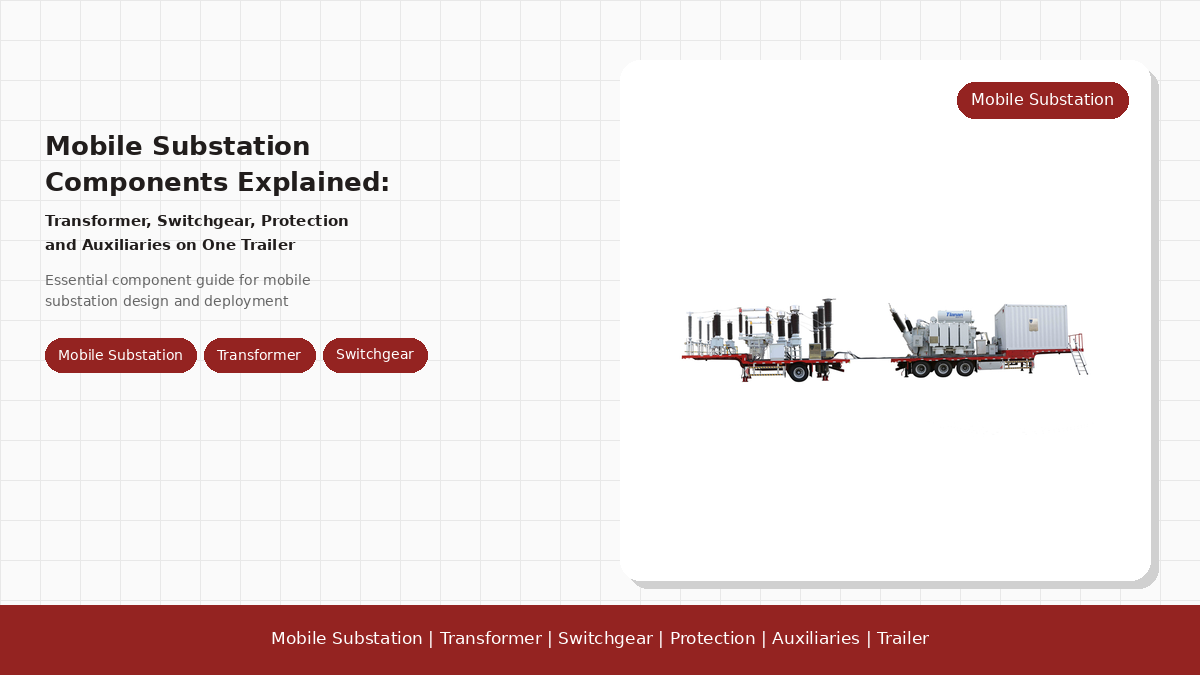
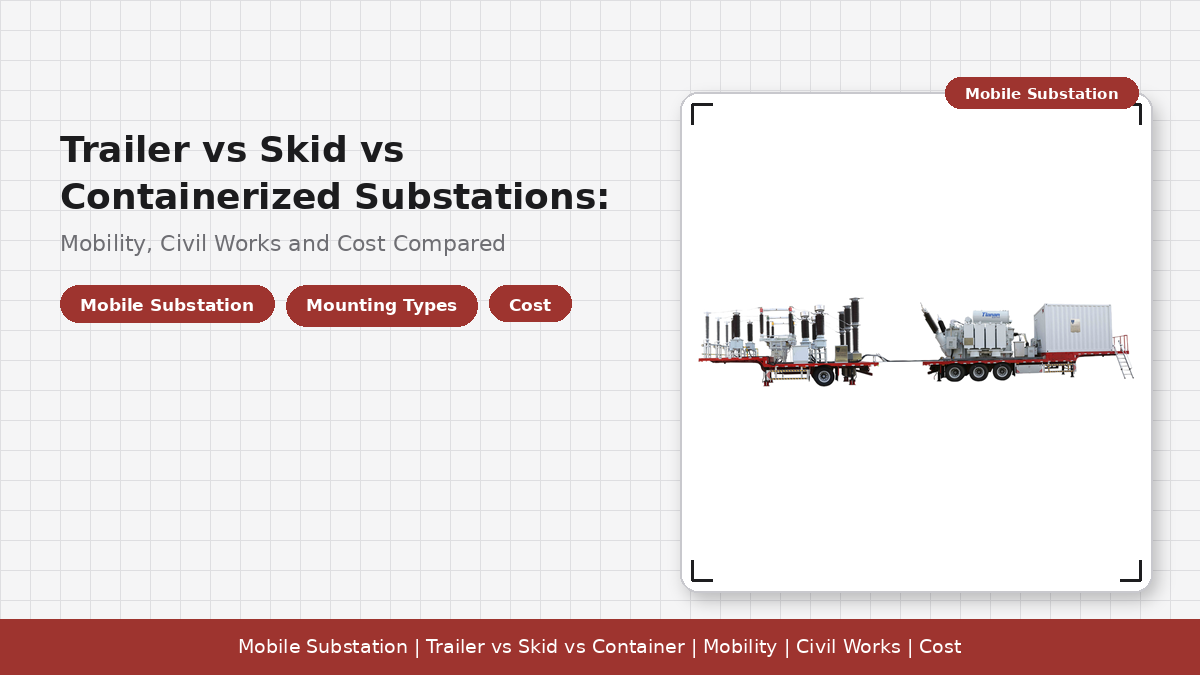
The CZBTD vehicle-mounted mobile substation carries the transformer, HV switchgear, MV switchgear, and LV panel on a single towable chassis with folding HV bushings — the RFQ mechanical block should make clear whether the EPC requires a single-trailer configuration (faster commissioning, lower handling risk) or a multi-trailer split (larger MVA possible, more on-site lifting).

CZBTD mobile substation chassis detail — folding HV bushings, integrated transformer bay, and MV switchgear panel showing the single-trailer mechanical integration that the RFQ must specify.
Protection, Control & SCADA Integration
The protection and control block determines whether the mobile substation can plug into a live grid or must operate as an islanded unit. EPC RFQs often under-specify this block because the EPC assumes the utility's existing protection will accommodate the new feeder — but a mobile unit is, by definition, redeployable, so its protection must work at every site it visits.
The RFQ should fix:
- Relay type and standard: IEC 60255 numerical relays, with IEC 61850 station bus support if the utility's network is digital. SEPAM, MICOM, REF615, and PCS-100 are common options.
- Protection functions required: differential (87T), overcurrent (50/51), earth-fault (51N), distance (21) for HV, under/overvoltage (27/59), and breaker failure (50BF).
- Bay controller and SCADA gateway: DNP3.0, IEC 61850 MMS, Modbus TCP, or IEC 60870-5-104, depending on the receiving control center.
- Metering: import/export kWh, demand, power factor, harmonics up to at least the 25th (per IEEE 519 or GB/T 14549 as applicable).
- Local HMI and remote access: color touch-panel HMI on the trailer, plus 4G/VSAT/satellite gateway where the mobile substation is in remote mining or oilfield sites.
- Battery and DC supply: nominal 110 V DC or 220 V DC, with battery autonomy (commonly 8 hours at full load) and battery type (VRLA vs lithium-ion). The GZDW series DC power supply cabinet and battery cabinet line are typical DC-supply subassemblies that should be referenced in the RFQ.
- Arc-flash and fault recording: if the project is in a jurisdiction that requires arc-flash labeling (NFPA 70E in the US, IEC TR 61641 in the EU), the RFQ must call for arc-fault tested panels.
- Cybersecurity: IEC 62443 zone classification for digital substations is increasingly required by utilities — the RFQ should state whether the unit is a Zone 1 / Zone 2 enclosure. The IEC 62443 series defines the zone and conduit model that most utility cybersecurity frameworks now mandate.
Without this block, the manufacturer will quote a "default" numerical relay with no SCADA gateway, and the EPC will discover at site acceptance that the unit cannot be integrated into the receiving SCADA system — a multi-month commissioning delay.
Transformer Selection Inside the Mobile Substation
The transformer is the cost and weight center of a mobile substation. RFQ transformer selection determines trailer size, transport permits, and operating losses. Two technology choices must be made explicit: oil-immersed vs dry-type, and ONAN vs ONAF cooling. The selection follows from the site envelope and the deployment pattern.
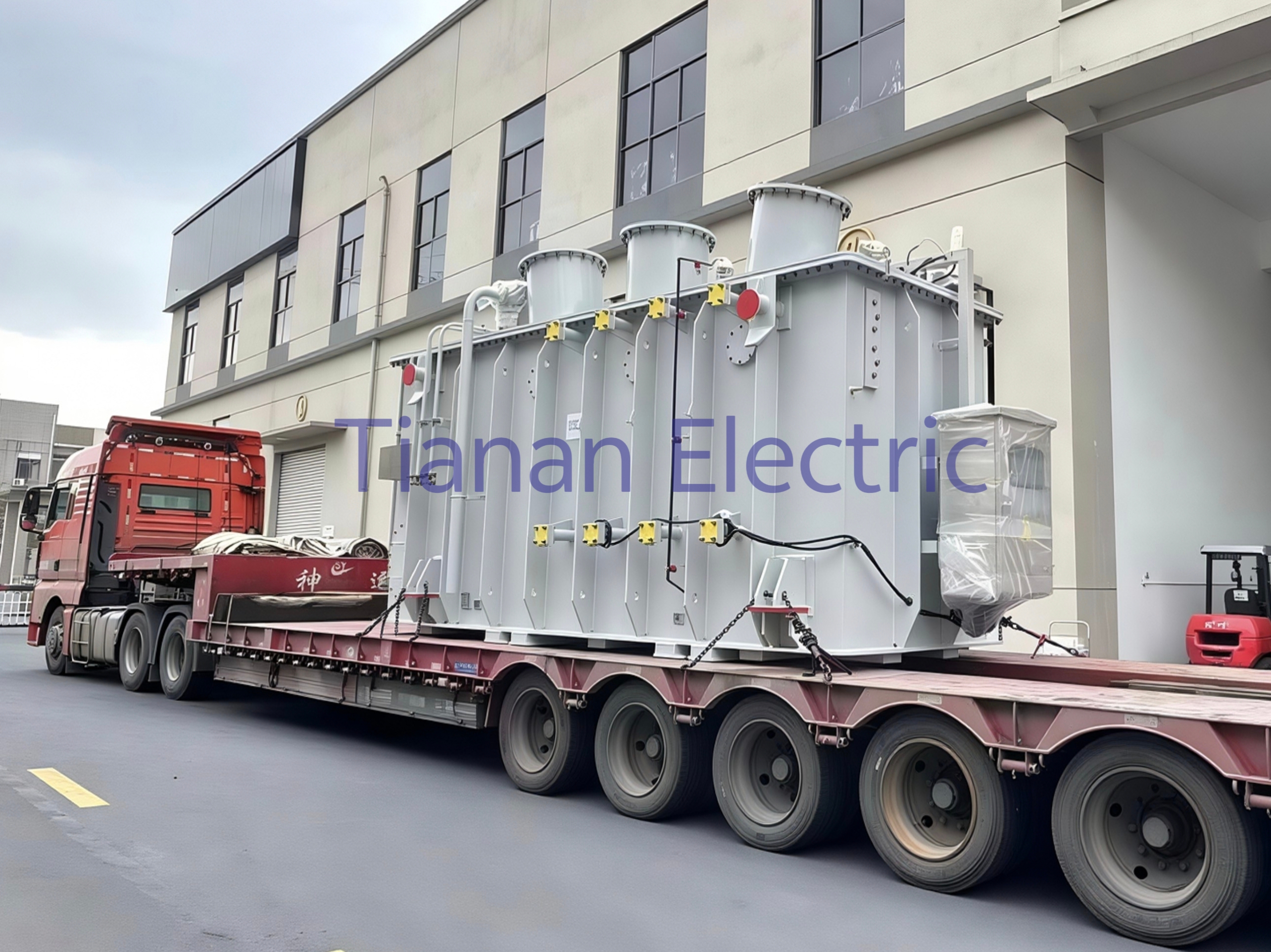
For repeated redeployment with long-distance towing and short on-site operation, oil-immersed ONAN is the default — the higher energy density keeps trailer weight within road limits and the sealed tank tolerates road vibration. Dry-type transformers are specified where fire risk excludes oil (underground mining, indoor industrial halls, near flammable storage) but they are 30-50% heavier per MVA and require larger trailers.
Key transformer items in the mobile substation RFQ:
- Rated MVA and voltage class, with continuous and short-time overload profile.
- Cooling class: ONAN, ONAF, or ONAN/ONAF dual-rated.
- Tap changer type: off-circuit tap changer (OCTC) for fixed-ratio mobile units, on-load tap changer (OLTC) for grid-feeding mobile units that must support voltage regulation.
- Losses: no-load loss (Po) and load loss (Pk) at 75 °C, with the load loss declared at the relevant uk%.
- Sound level: ≤55 dB(A) at 1 m for utility, ≤65 dB(A) for industrial site tolerance — IEC 60076-10.
- Impedance: declared at the rated MVA, not at a generic value.
- Oil type: mineral oil (Type I), silicone oil (Type II), or natural ester (Type III, e.g., FR3 or Midel). Ester fluids have higher fire points and are specified for fire-sensitive sites.
- Short-circuit withstand: must be declared for the uk% and duration (typically 2 s for distribution-class, 3 s for transmission-class).
For HV-side transformer duty above 66 kV, Tianan's 220 kV oil-immersed power transformer and 66–110 kV oil-immersed power transformer define the rating envelope that can be packaged into a mobile substation. For LV-side distribution step-down, the SC series 10 kV dry-type transformer is the dry-type counterpart for indoor or fire-sensitive deployments.
Switchgear, RMU & Fused Switchgear Specification
The switchgear block covers the HV side (incoming line panel, transformer feeder panel), the MV side (incoming transformer panel, outgoing feeder panels, bus tie), and the LV side (main breaker, feeder breakers, capacitor bank breaker). The RFQ must specify switching technology, short-circuit rating, and panel arrangement.
For HV side incoming panels at 35–110 kV, the EPC typically specifies:
- Switching technology: SF6 gas-insulated switchgear (GIS) for compact footprint, air-insulated metal-clad (AIS) for ease of maintenance, or hybrid GIS for reduced SF6 mass.
- Short-circuit rating: 25 kA, 31.5 kA, or 40 kA at the rated voltage, with duration 3 s or 4 s.
- Operating mechanism: spring-charged, motor-charged with manual override.
- Interlocking: mechanical and electrical interlocks per IEC 62271-200.
The XGN(XGTD6)-12(24) indoor gas-insulated metal-enclosed switchgear and XGTD7 indoor gas-insulated metal-clad switchgear lines are typical MV-side switching options for the mobile substation. For AIS designs, the KYN28A-12(24) air-insulated withdrawable metal-clad switchgear is the conventional choice.
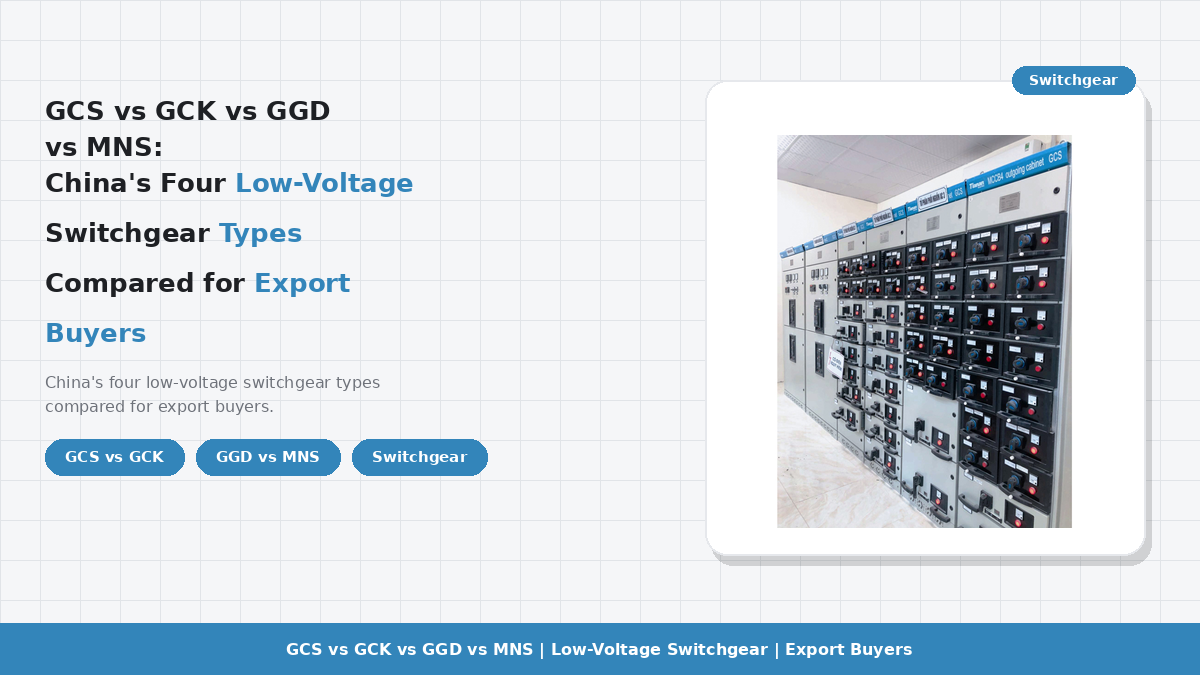
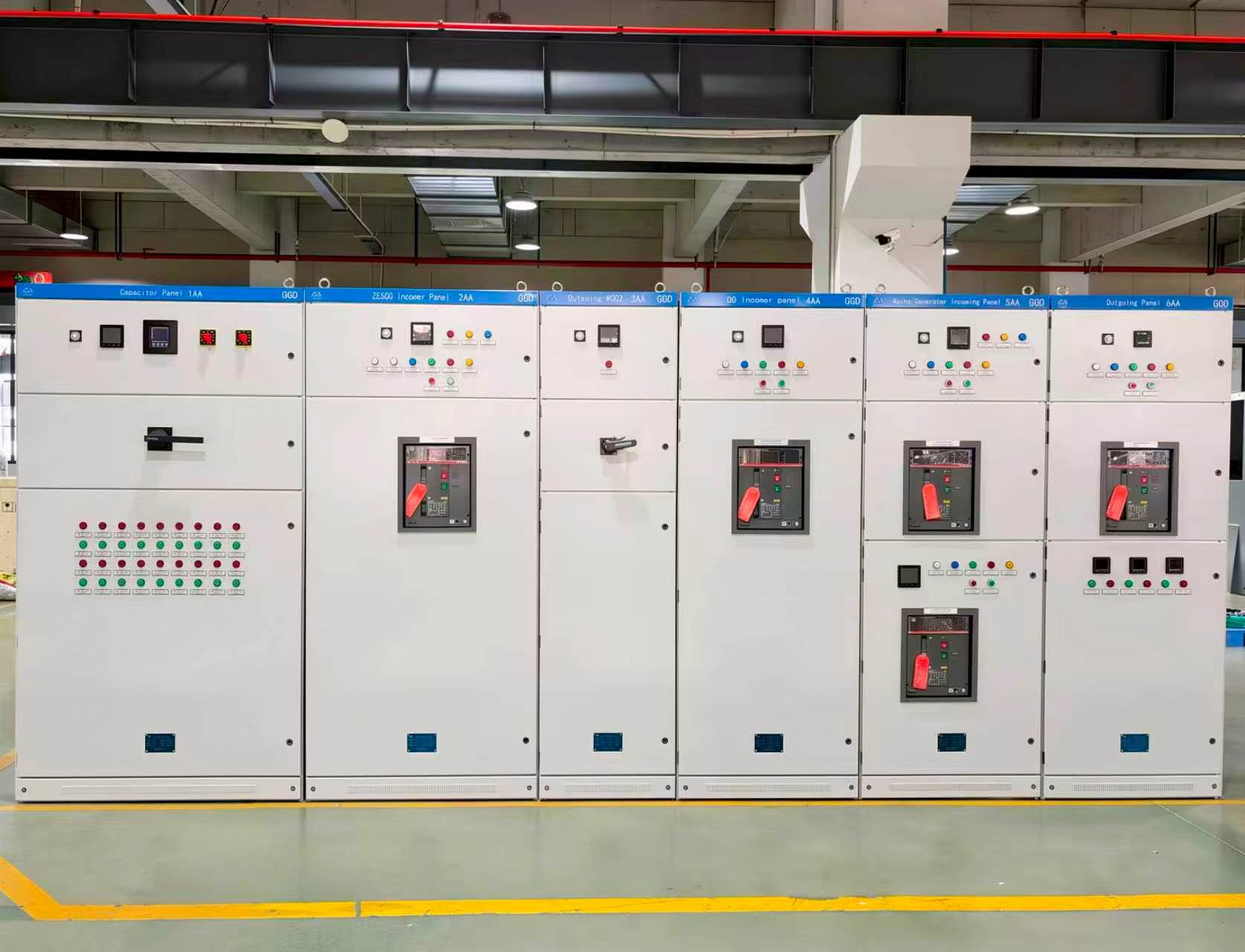
For the LV side, the GCS LV withdrawable switchgear and GGD AC LV switchgear families cover feeder distribution. For switching in transformer feeder bays at 12–24 kV, the VS1(VTD6) indoor HV vacuum circuit breaker is the standard vacuum interrupter choice, paired with the FTD9 indoor HV vacuum load switch for ring-main and load-break duties.
Surge protection at the HV terminals is a frequent RFQ miss. The metal-oxide surge arrester line should be cross-referenced in the RFQ for both transformer and switchgear protection. For utility-grade switchgear coordination studies, the IEEE PES Substation Committee publishes reference application guides that map BIL, surge arrester classification, and short-circuit testing into a single coordination envelope.

HV/MV switchgear panels and VCB truck arrangement inside the CZBTD mobile substation — the panel arrangement the RFQ must specify when defining switchgear technology and short-circuit rating.
Compliance, Standards & Documentation Deliverables
The compliance block is where most RFQ responses diverge in completeness. A mobile substation destined for export must satisfy multiple standards regimes depending on destination. The RFQ must declare the destination country's utility regulation and the EPC's standard preference, and the manufacturer must declare the standards they comply with.
Mandatory specification items:
- Standards regime: IEC (international), IEEE/ANSI (Americas), GB (China domestic), and country-specific addenda (e.g., IS for India, NOM for Mexico, GOST for Russia/EAC).
- Type test certificates: short-circuit withstand, temperature rise, impulse voltage, sound level, and — for GIS panels — gas tightness and partial discharge.
- Routine test reports: every unit shipped must have a complete factory acceptance test (FAT) report, including transformer ratio, no-load loss, load loss, oil tests, and switchgear mechanical operations.
- Nameplate and traceability: per IEC 60076 for transformers and IEC 62271-200 for switchgear. Nameplate must show year of manufacture, serial number, weight, oil weight (where applicable), and standards reference.
- Documentation set: outline and general arrangement drawing, single-line diagram, protection schematic, wiring diagram, terminal connection diagram, foundation drawing, earthing drawing, transportation and lifting drawing, and O&M manual in English (or in destination language).
- Spare parts list and special tools for site commissioning.
- Warranty terms: typically 18–24 months from delivery or 12 months from commissioning, whichever is earlier.
- Packing, marking, and shipping: seaworthy packing, containerized or break-bulk, with handling marks and container number for tracking.
Referenceable authoritative standards sources include IEC Webstore for IEC 60076, IEC 62271, and IEC 60255 series, and IEEE Standards Association for IEEE C57 distribution-transformer and IEEE C37 switchgear series. For export compliance to North America, UL Solutions and NEMA provide the certification framework that some utilities require. For system-level coordination and grid-connection studies on HV/MV substations, CIGRE working-group brochures are the de facto international reference, and ENTSO-E publishes the European network code requirements that apply when the mobile substation feeds a European transmission or distribution grid.
9 RFQ Questions Every EPC Must Ask the Manufacturer
With the eight specification blocks defined, the RFQ becomes a verification exercise — the EPC checks that the manufacturer's quoted configuration matches the spec. The nine questions below expose the most common gaps between a quoted unit and a deployable unit. Use them as a checklist when reviewing bids.
- What is the maximum road-transport weight, with and without oil, and is the trailer axle rating within the legal limit of every transport route in our project?
- What is the total dimensions in transport configuration (length × width × height) including the folded HV bushings, and do these dimensions require special transport permits at any point in our route?
- What is the declared no-load loss and load loss of the transformer at the rated MVA and uk%, and what efficiency class per IEC 60076-20 does this correspond to?
- Which protection relay family and firmware version is quoted, and does the relay support IEC 61850 MMS, DNP3.0, or IEC 60870-5-104 as required by our utility's SCADA system?
- What is the short-circuit withstand rating of the HV and MV switchgear panels, and what is the duration (3 s or 4 s), and is the test certificate from an accredited lab?
- What is the seismic qualification of the trailer and the transformer anchoring system, and which seismic zone does it cover (per IEEE 693 or GB 50260)?
- What is the ambient temperature range, altitude, and humidity rating, and is the transformer dry-out procedure defined for cold-site commissioning below -25 °C?
- What is the scope of factory acceptance testing, is the FAT witnessed by the EPC, and what is the cost and duration of an EPC-witnessed FAT at the manufacturer's premises?
- What is the warranty period, what components are excluded, and what is the manufacturer's mean time to repair or replacement for the most field-critical modules (relays, VCB vacuum interrupters, OLTC contacts)?
The answers to these nine questions, traced back to the spec blocks above, form the technical evaluation matrix against which competing bids are scored. A bid that does not answer all nine in writing is not yet a comparable bid — it is a sales quotation, not an engineering offer.

Additional CZBTD mobile substation integration detail — instrument compartment, transformer instrumentation, and cable entry showing the integration scope that an RFQ must declare.
Closing Note
A mobile substation RFQ succeeds when the EPC treats the eight specification blocks — site envelope, voltage and capacity, mobility, protection and control, transformer, switchgear, compliance, and the nine RFQ questions — as one engineering exercise rather than nine procurement line items. The mobile unit is, by design, a complete substation that must work at every site it visits, so its specification is unforgiving of omissions. EPCs that run this checklist against the CZBTD vehicle-mounted mobile substation or a similar unit from Tianan's mobile substation catalog consistently receive bids that are technically comparable and commercially auditable.
To take the next step, request the mobile substation RFQ template from Tianan's international sales team. The template is structured against the eight spec blocks above and the nine RFQ questions, and can be adapted to your project's envelope and standards regime.
FAQ — Frequently Asked Questions
What is the difference between a mobile substation and a prefabricated substation?
A1: A mobile substation is mounted on a trailer or skid, is towable by road or rail, and is designed for repeated redeployment between sites with minimal on-site assembly. A prefabricated substation (such as the ZBW series) is a factory-built compact substation in a metal enclosure that is delivered to site as a complete unit but is not designed to be moved once commissioned.
What voltage classes can a typical mobile substation handle?
A2: Standard mobile substations cover 10 kV to 110 kV on the HV side and 0.4 kV to 35 kV on the LV side. For higher voltages up to 220 kV, the unit is typically split across multiple trailers or transported as a skid-mounted unit lifted by crane onto a low-bed trailer.
How is the transformer cooled in a mobile substation?
A3: Most mobile substations use ONAN (oil natural air natural) cooling to keep the trailer weight within road limits. ONAF (oil natural air forced) cooling fans are added where the project requires higher MVA in a single trailer or where the ambient temperature is above 40 °C.
What is the typical delivery lead time for a mobile substation?
A4: A standard 10–35 kV mobile substation typically ships within 8 to 14 weeks after order confirmation. Higher-voltage 66–110 kV units with custom transformer ratings typically ship within 16 to 24 weeks, with longer lead times for units with on-load tap changers or IEC 61850 station bus integration.
Can a mobile substation be paralleled with an existing fixed substation?
A5: Yes. With proper protection coordination (ANSI 25 sync-check relay, IEC 60255-25), the mobile substation can be paralleled to a live grid through a synchronizing breaker. The RFQ must declare the synchronization standard required by the receiving utility.
What are the most common EPC mistakes when writing a mobile substation RFQ?
A6: The most common omissions are: failing to declare ambient temperature minimum and altitude, omitting the transport route envelope, leaving the protection relay standard open, omitting seismic and wind zone, and treating the FAT as optional. Each omission creates a change-order risk.
Is a mobile substation more expensive than a fixed substation on a per-MVA basis?
A7: On a per-MVA basis, a mobile substation typically carries a premium over a fixed substation of equivalent MVA, due to the trailer, the engineered transport configuration, and the higher integration testing. The premium is recovered through faster deployment and the option to redeploy the asset across multiple projects.
How is the mobile substation grounded at the site?
A8: The mobile substation's chassis is bonded to a temporary copper-clad ground grid laid on-site. The grid is sized to the soil resistivity per IEEE 80, with ground resistance typically below 5 Ω for utility sites and below 10 Ω for industrial sites.
What maintenance does a mobile substation require between deployments?
A9: Between redeployments, the EPC should perform a visual inspection of bushings, a check of oil level and dielectric strength in the transformer, mechanical operation of all breakers, verification of relay settings against the next site, and a check of all towing components including tires, brakes, and the pintle hook. A full FAT-style check is recommended every 12 months or 5 redeployments, whichever comes first.