
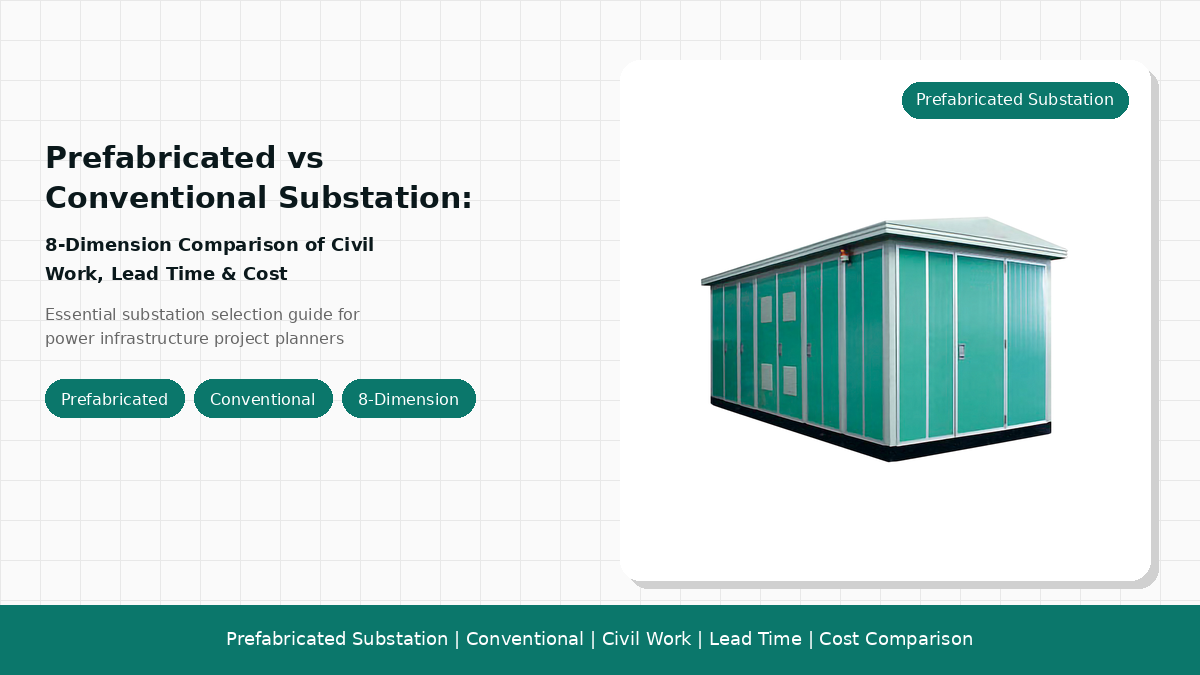
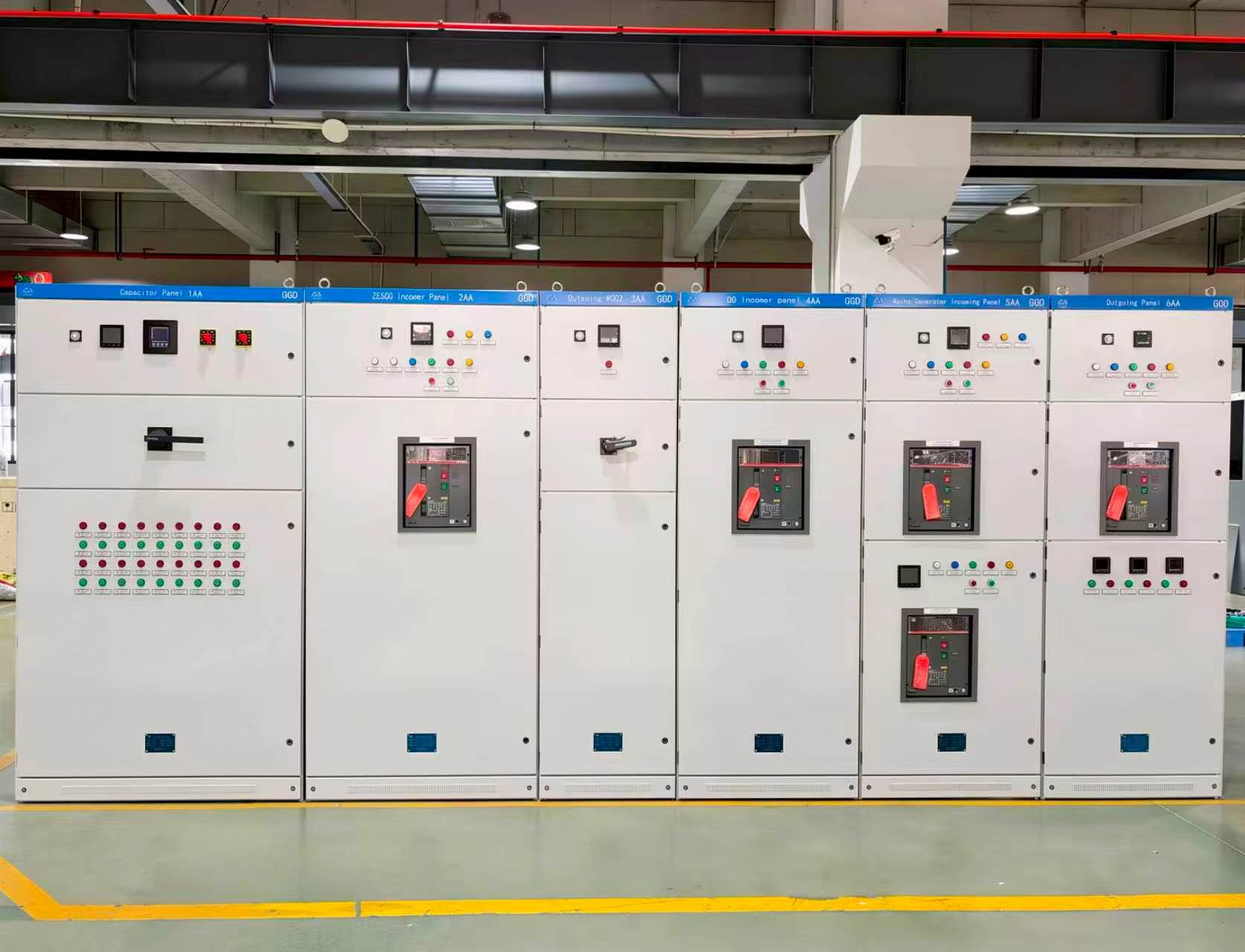
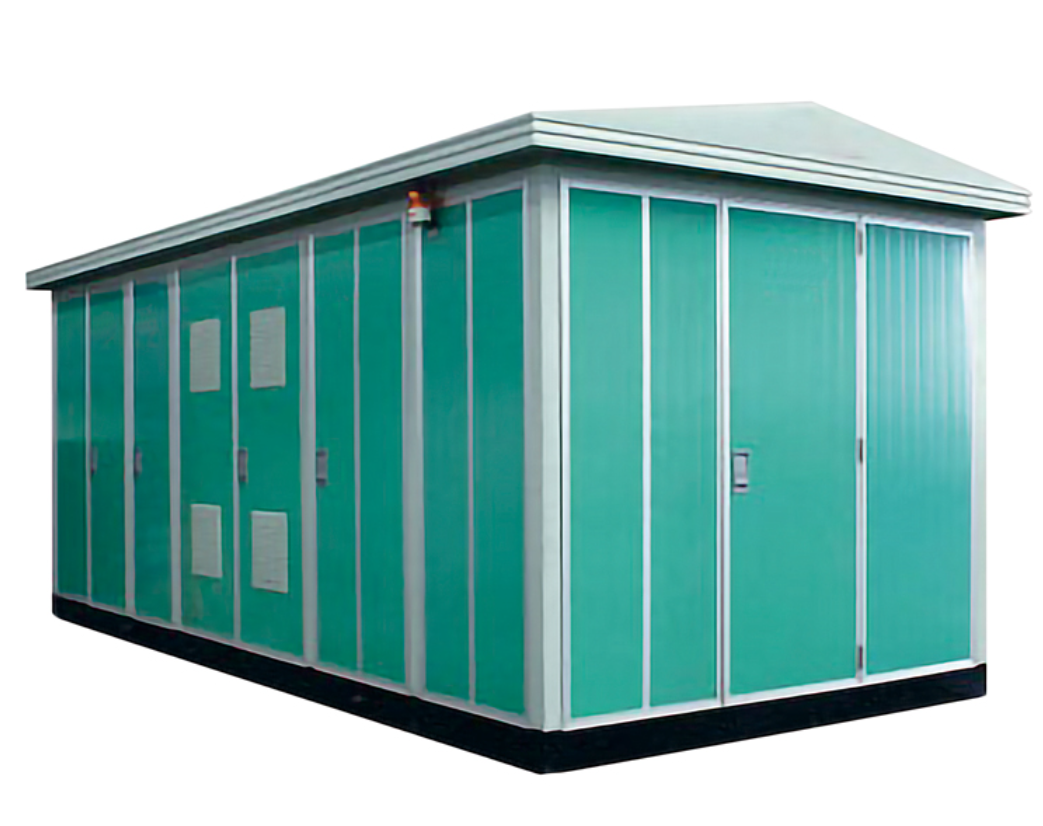
ZBW-12(24) compact prefabricated substation: an integrated HV/LV unit meeting IEC 62271-202:2014, shown during factory testing prior to shipment.
In over 15 years of helping project developers and utility buyers source power equipment across Asia, Africa, the Middle East, and South America, one of the most common questions I get from engineering teams is: "Should we go with a prefabricated substation or build conventional?"
The honest answer is: it depends on your site constraints, your project timeline, and your long-term operational model. What I can do is walk you through an honest, dimension-by-dimension comparison — including where prefabricated units genuinely win, and where conventional design still holds legitimate advantages. No marketing gloss. Just what I have seen work and not work across real projects in the field.
1. Civil Work & Foundation Requirements
When we talk about civil work, the difference between these two approaches is night and day. Because a prefabricated substation arrives as a factory-built, weatherproof enclosure with all equipment pre-installed, the only on-site civil requirement is a properly designed concrete foundation pad and the cable entry trenches. There is no need for a dedicated control building, no brick-and-mortar switchgear room, and no separate firewall wall construction between equipment bays.
A conventional substation, by contrast, requires a full suite of on-site construction activities: structural civil works for the building housing the switchgear, the transformer foundation with oil containment, cable trenches and cleats, fence and grounding system, drainage, fire protection infrastructure, and climate control systems for the control room. Each of these is a separate work package with its own contractor, timeline, and risk of delay.
According to project data I routinely see from our export references — from substation projects delivered to Jordan, Costa Rica, and Iraq — the civil work phase alone for a conventional substation typically runs 4 to 8 months before equipment even arrives on site. For a prefabricated unit, that civil phase compresses to 2 to 6 weeks for foundation preparation.
2. Lead Time & Delivery Schedule
Schedule is where prefabricated substations pull decisively ahead. Because the unit is built and fully tested in the factory before shipment, the typical delivery window from order confirmation to site handover is 3 to 6 months. That timeline includes manufacturing, in-house testing, painting, crating, and logistics to port.
A conventional substation project timeline is fundamentally a sequential chain: civil design and permitting must be completed before civil construction begins; civil construction must reach a certain stage before equipment can be installed; installation must be substantially complete before commissioning can start. In practice, this commonly produces total project timelines of 8 to 18 months, with the civil phase alone consuming 4 to 10 months.
For renewable energy projects — solar and wind farms with grid connection deadlines set by power purchase agreements — this schedule difference is not academic. I have spoken with developers who told me outright that the conventional approach would have made their projects financially unviable because of the way PPA penalties are structured for late grid synchronization. The prefabricated route was the only path that fit within their window.
3. Installed Cost & Total Cost of Ownership
Let me be direct here: the upfront unit price of a prefabricated substation sits at a mid-range to upper-single-digit percentage premium over a basic conventional substation package. Depending on the specification, the differential can fall anywhere from the upper single digits to around 20%, and in some configurations — particularly when site civil costs are fully accounted for — the prefabricated option can actually land at parity or below.
What matters far more than the sticker price is the total cost of ownership across the project lifecycle. Because prefabricated substations require far fewer on-site contractor packages, the soft costs associated with civil project management, site supervision, multiple inspection stages, and commissioning labor are all substantially lower. When you add up the civil contractor fees, the engineering inspection services, the site logistics coordination, and the extended equipment storage risk on site, the conventional approach accumulates cost line items that the prefabricated approach simply does not generate.
According to IEA Electricity 2024 data, electricity demand growth is accelerating globally, and project developers are under increasing pressure to commission generation and distribution assets faster to meet rising grid load. That economic reality makes the total cost of ownership advantage of prefabricated design increasingly significant in the current project financing environment.
4. Site Installation & Commissioning
Once a prefabricated substation arrives on site, the installation sequence is straightforward: position the unit on the pre-prepared foundation, connect the incoming and outgoing cables, perform termination and inspection, and initiate the pre-commissioning checklist. Because all equipment has already been wired, tested, and adjusted at the factory under controlled conditions, commissioning is largely a matter of site-specific verification rather than corrective work.
A conventional substation installation involves coordinating the delivery and positioning of individually procured switchgear, transformer, protection panels, busbars, and cabling from multiple suppliers, followed by on-site termination of hundreds of control cables — a process that routinely surfaces connection errors, missing components, and compatibility issues discovered only at the moment of energization.
In my experience working with international projects — including mobile substation deliveries to India, Costa Rica, and Iran — the on-site commissioning phase for conventional substations frequently runs 4 to 12 weeks and often requires multiple return visits by manufacturer engineers to resolve issues that should have been caught in the factory. For a developer operating in a remote location with limited local technical support, that difference in commissioning complexity is a significant operational risk.
5. Footprint & Layout Flexibility
The footprint advantage of prefabricated substations is one of their most frequently cited strengths — and for good reason. Because all components are integrated into a compact, factory-sealed enclosure, a prefabricated unit of the same capacity typically occupies only 1/10 to 1/5 of the land area required by a conventional brick-and-mortar substation.
This space savings comes from the elimination of the control building, the reduction or removal of firewall spacing requirements that apply to conventional outdoor switchgear layouts, and the highly integrated arrangement of transformer, HV compartment, and LV distribution in a single structure. The ZBW-12(24) compact substation, for example, integrates HV switchgear rated at 12(24) kV, a Power Transformer, and LV distribution equipment into a single factory-built enclosure that can be sited on a footprint measured in tens of square meters rather than hundreds.
For urban distribution applications, rooftop installations, or industrial sites with constrained land availability, this compact form factor opens up installation possibilities that conventional design simply cannot offer. For large utility switchyards with ample land and a long operational history of conventional construction, the footprint argument carries less weight — but for a growing share of new build projects globally, it is a primary driver.
6. Quality Control & Factory Acceptance Testing
Quality control is one of those dimensions where I think the prefabricated approach is genuinely superior, and it is not even close. When a substation is built in a factory, every connection, every relay setting, every pressure reading, and every insulation test is performed under controlled environmental conditions by trained technicians operating to a defined production procedure. Deviations are caught and corrected before the unit leaves the floor.
IEC 62271-202:2014, which governs the design and manufacturing of prefabricated substation assemblies, requires a comprehensive set of type tests and routine tests including dielectric testing, temperature rise measurement, short-circuit withstand verification, and mechanical operation tests — all conducted under controlled conditions before any unit ships. Per the IEC 62271-202 standard, these tests are not optional add-ons; they are a mandatory part of the certification regime.
For conventional substations assembled on site, quality depends on the workmanship of multiple trades, the coordination between different contractors, the environmental conditions during assembly (temperature, humidity, dust), and the rigor of the resident engineer's inspection regime. In my experience across projects in hot, dusty climates — conditions common across much of the Middle East and Sub-Saharan Africa — on-site assembly quality is inherently more variable than factory production, because the environmental factors that affect cable termination quality, contact alignment, and insulation cleanliness are simply harder to control outdoors.
7. Scalability & Future Expansion
Conventional substations are generally more straightforward to expand through the addition of new feeder bays, bus extensions, or transformer uprating, because the original civil infrastructure was designed with those additions in mind and the space is already there. The engineering is established, the construction methods are standard, and most utility engineers have deep familiarity with the process.
Prefabricated substations can also be expanded — but the approach depends heavily on the original design. Some modular prefabricated designs allow the addition of transformer bays or LV feeder extensions as modular add-on sections, while others are sold as fixed-configuration units where expansion requires replacement rather than extension. If future capacity growth is a known requirement at the time of initial specification, this needs to be explicitly flagged with the manufacturer so the original unit can be designed with the necessary reserved space and interface provisions.
The key takeaway: if your 5-to-10-year grid development plan includes specific expansion phases, the conventional approach offers more flexibility for phased construction. If your concern is rapid initial deployment with the option to add capacity later, a properly specified prefabricated solution can accommodate that — but only if it is planned upfront, not discovered after installation.
8. Transportation, Logistics & Site Risks
This is one dimension where conventional substations have a genuine structural advantage: no transportation constraints. Every piece of a conventional substation arrives in separate packages — the transformer, the switchgear panels, the structures, the control panels — via standard logistics routes and can be handled with conventional site equipment.
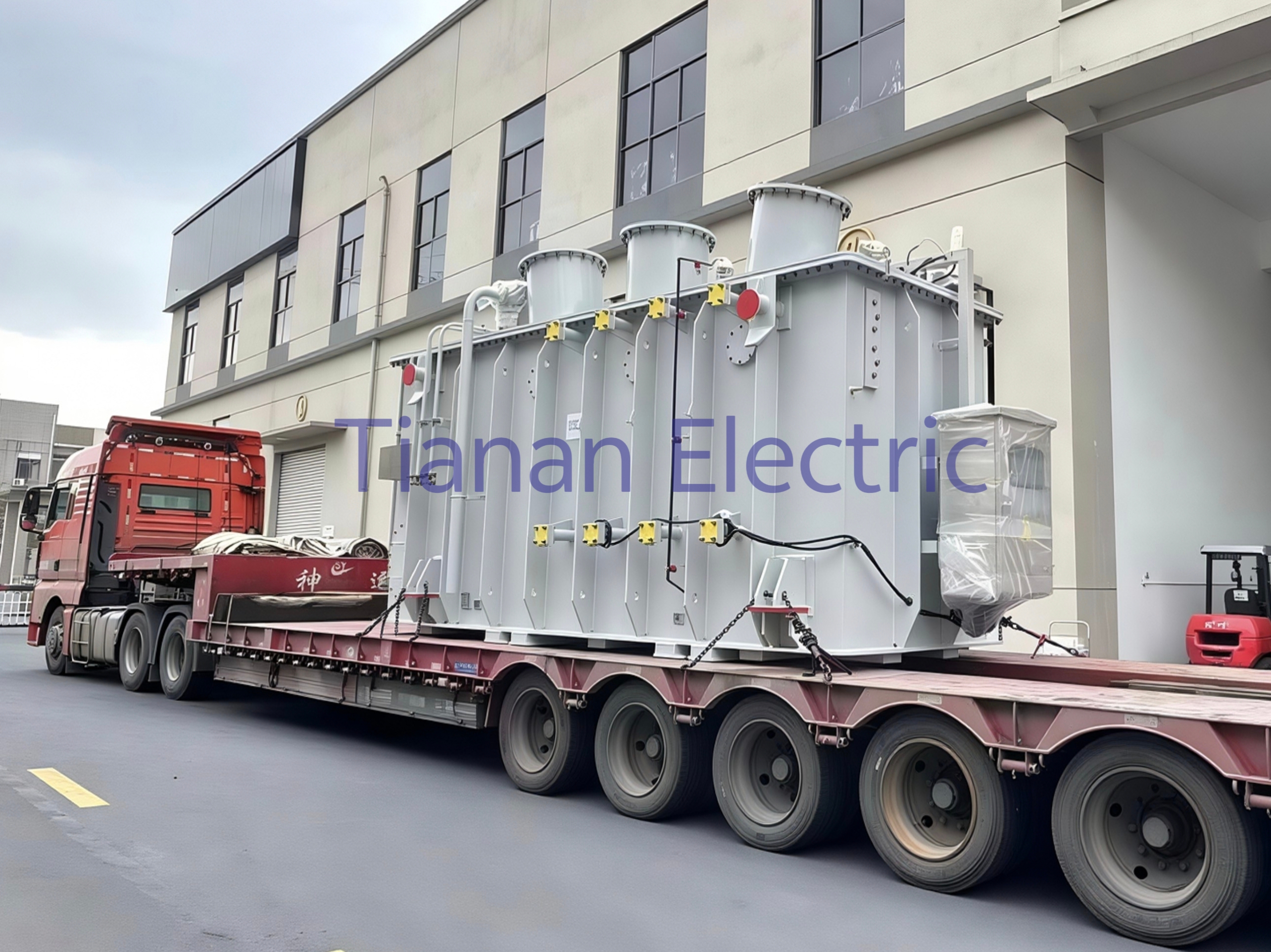
Prefabricated substations, by definition, are larger assemblies. A fully equipped compact substation unit can weigh anywhere from 5 to 25 metric tonnes depending on configuration, and its dimensions must be compatible with road transport limits — typically 3.0 m width, 3.0 m height, and 12 m length for standard overland transport without escort. For sites in remote locations, on islands, in mountainous terrain, or accessible only by unpaved roads, this logistics constraint is a genuine consideration that can eliminate the prefabricated option or require specialized transport solutions that add cost and scheduling risk.
On-site risks also differ. A conventional substation construction site is exposed to weather, theft, and vandalism for a longer period — the entire construction phase — whereas a prefabricated unit typically arrives near the end of the project cycle and is energized within days of arrival. For projects in regions with significant security concerns or extreme weather seasons, that reduction in site exposure time is a meaningful risk mitigation factor.
Structural Comparison Table
| Dimension | Prefabricated Substation | Conventional Substation |
|---|---|---|
| Civil Work Scope | Foundation pad + cable trenches only; no control building | Full civil construction: building, foundations, firewalls, drainage, control room |
| Typical Lead Time | 3 to 6 months from order to site handover | 8 to 18 months including civil + procurement + installation phases |
| Footprint | 1/10 to 1/5 of conventional for same capacity | Full land area including equipment spacing and control building |
| Quality Control | Factory testing under controlled conditions; IEC 62271-202 type tests mandatory | On-site assembly with multiple trades; quality depends on contractor and conditions |
| Commissioning | Site verification + energization; factory-tested components | Full on-site testing of connections, relay settings, and protection coordination |
| Upfront Cost | Mid-range to upper-single-digit premium over basic conventional package | Lower base unit cost; higher total project cost when civil packages included |
| Expandability | Modular add-on sections possible if specified upfront | Standard bus extension and feeder bay addition with established methods |
| Transport / Logistics | Large unit transport; width/height/weight limits apply | No transport constraints; standard freight for all components |
Which Should You Choose?
The choice between prefabricated and conventional substation design is not a binary judgment of which technology is better — it is a question of fit for your specific project context. Based on what I have seen work across diverse international projects, here is how I think about it:
Choose a prefabricated substation when:
- Your project timeline is constrained by grid connection deadlines, power purchase agreement penalties, or capital deployment timelines — and 3 to 6 months is the available window.
- Your site has limited land availability, challenging terrain, or restricted access that makes conventional civil construction difficult or expensive to stage.
- You are working in a remote or challenging climate environment where on-site quality control is inherently difficult and factory production consistency is preferable.
- Your project is a renewable energy installation — solar, wind, or battery storage — where speed of grid synchronization directly drives revenue.
- Your operational team prefers a single source of supply responsibility rather than coordinating multiple civil and equipment contractors.
Choose a conventional substation when:
- Future expansion is a near-term certainty and the civil infrastructure for that growth needs to be built as part of this project.
- Your site is remote and access constraints make transporting a large prefabricated unit impractical or prohibitively expensive.
- Your specification requires a highly customized arrangement that cannot be accommodated in a standard prefabricated enclosure design.
- Your utility or grid operator has established conventional design standards that are contractually required for interconnection.
Final Thoughts
I have been selling power equipment internationally for over 15 years, and the honest truth is that the right answer for your project depends on factors that are specific to your project — your timeline, your site, your budget structure, and your operational capability. What I can tell you with confidence is that prefabricated substation technology has matured significantly, the compliance standards — particularly IEC 62271-202:2014 and IEEE 1547 — are robust and widely accepted by utilities globally, and the total cost of ownership argument in favor of prefabricated design is stronger than it was even five years ago.
If you are in the early stages of evaluating options for a specific project, I am happy to walk through the site conditions, the specification requirements, and the timeline constraints to help you determine which approach makes the most sense. We supply prefabricated substations, mobile substations, and power transformers to project developers and utilities across more than 50 countries, and the specifics of your project matter more than any general recommendation I could make from a distance.
Ready to Discuss Your Project?
If you have a specific substation requirement — prefabricated, mobile, or conventional — reach out and let's talk through the specification, timeline, and destination market requirements.
Contact Henry at Tianan OverseasFrequently Asked Questions
What is the typical lead time difference between a prefabricated and a conventional substation?
Prefabricated substations typically deliver in 3 to 6 months from order confirmation to site handover, because the unit is built and fully tested in the factory. Conventional substations commonly require 8 to 18 months, with civil construction, equipment procurement, and on-site assembly running as sequential phases that extend the total project timeline significantly.
How much footprint does a prefabricated substation save compared to a conventional design?
A prefabricated substation of the same capacity typically occupies only 1/10 to 1/5 of the land area required by a conventional brick-and-mortar substation, because the equipment is integrated into a compact, factory-sealed enclosure with no separate control building or firewall walls required.
What are the civil work requirements for installing a prefabricated substation?
Installing a prefabricated substation requires only a prepared concrete foundation pad and incoming cable trenches. Unlike conventional substations, there is no need for a dedicated control building, brick firewall construction, or extensive on-site civil works, which eliminates multiple contractor packages and significantly reduces site preparation complexity.
Which substation type offers better quality control during manufacturing?
Factory-built prefabricated substations undergo complete inline testing and inspection before shipment, including high-voltage tests, functional checks, and protection relay calibration, all performed under controlled conditions. Conventional substations are assembled on-site with multiple trades and contractors, making consistent quality harder to guarantee and commissioning more complex.
Can prefabricated substations meet international standards for grid interconnection?
Yes. Leading prefabricated substation manufacturers design their products to comply with IEC 62271-202 for high-voltage switchgear assemblies and IEEE 1547 for interconnecting distributed resources with electric power systems. Both standards are routinely verified through type tests and factory acceptance tests before delivery.
Are prefabricated substations suitable for renewable energy projects?
Prefabricated substations are widely deployed in solar, wind, and battery storage projects worldwide. Their compact footprint, rapid deployment, and factory-integrated design make them particularly well-suited for greenfield renewable sites where construction timelines are tight and land is often at a premium.
What is the total cost of ownership difference over a 20-year project horizon?
While the upfront purchase price of a prefabricated substation falls in the mid-range to upper-single-digit percentage premium over a basic conventional design, the total cost of ownership over 20 years typically favors the prefabricated option because reduced civil work, faster commissioning, and lower on-site labor requirements eliminate multiple cost line items that conventional projects accumulate across the project lifecycle.
How do prefabricated and conventional substations compare on future expandability?
Conventional substations offer straightforward bus extension and new feeder bay addition through standard construction. Prefabricated substations can also be expanded through modular add-on sections or by installing additional transformer bays, though the specific expansion method depends on the original design and whether physical space was reserved at the time of initial installation.