
0102030405
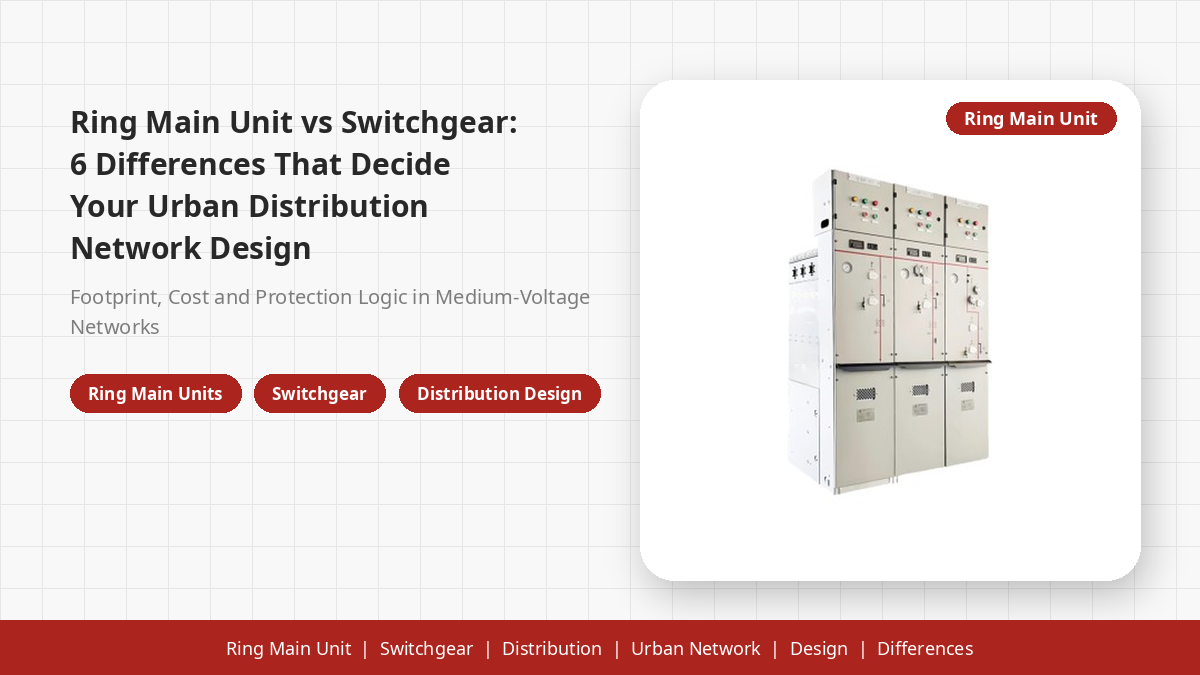
Ring Main Unit vs Switchgear: 6 Differences That Decide Your Urban Distribution Network Design
2026-09-24
A ring main unit and a switchgear panel look similar from the outside — both are metal-clad, both are gas-insulated, both carry medium voltage. The judgment you make at the network-design stage is the judgment that decides which asset fits which node, and the wrong judgment is the judgment that locks the network into a footprint that does not scale, a fault-clearing profile that does not protect, or a switching profile that does not support the daily operations. Six differences drive the choice, and the right conversation for a planning engineer is the conversation that walks through all six rather than the conversation that picks the asset on unit cost alone.
Quick Summary
- Six differences drive the choice: function, voltage class, fault-current rating, footprint, switching operations, and cost per functional unit — the right program walks through all six rather than picking the asset on unit cost alone.
- RMUs carry the ring-network switching and load-switch function — the compact, sealed asset at the ring node, where the daily switching operations concentrate.
- Switchgear carries the fault-clearing and network protection function — the broader category that includes the protection breakers, disconnectors, and busbars at the substation feeder.
- The two are not interchangeable but often combined — most urban distribution networks run RMUs at the ring nodes and switchgear at the substation feeder.
- IEC 62271 series anchors the rating framework— the international standard for Hv Switchgear and controlgear that every well-specified program references.
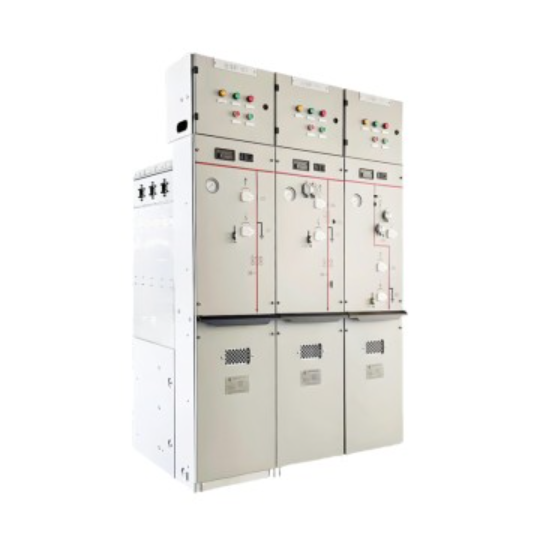
For a planning engineer, utility project manager, or infrastructure EPC scoping an urban distribution network, the right framework is the framework that picks the asset against the network's topology, the node site's footprint, and the protection philosophy. The HV and MV switchgear range is the catalog starting point; the XGN/XGTD6-12(24) ring network switchgear product page is the right reference for the medium-voltage ring-network tier.
1. The Functional Difference
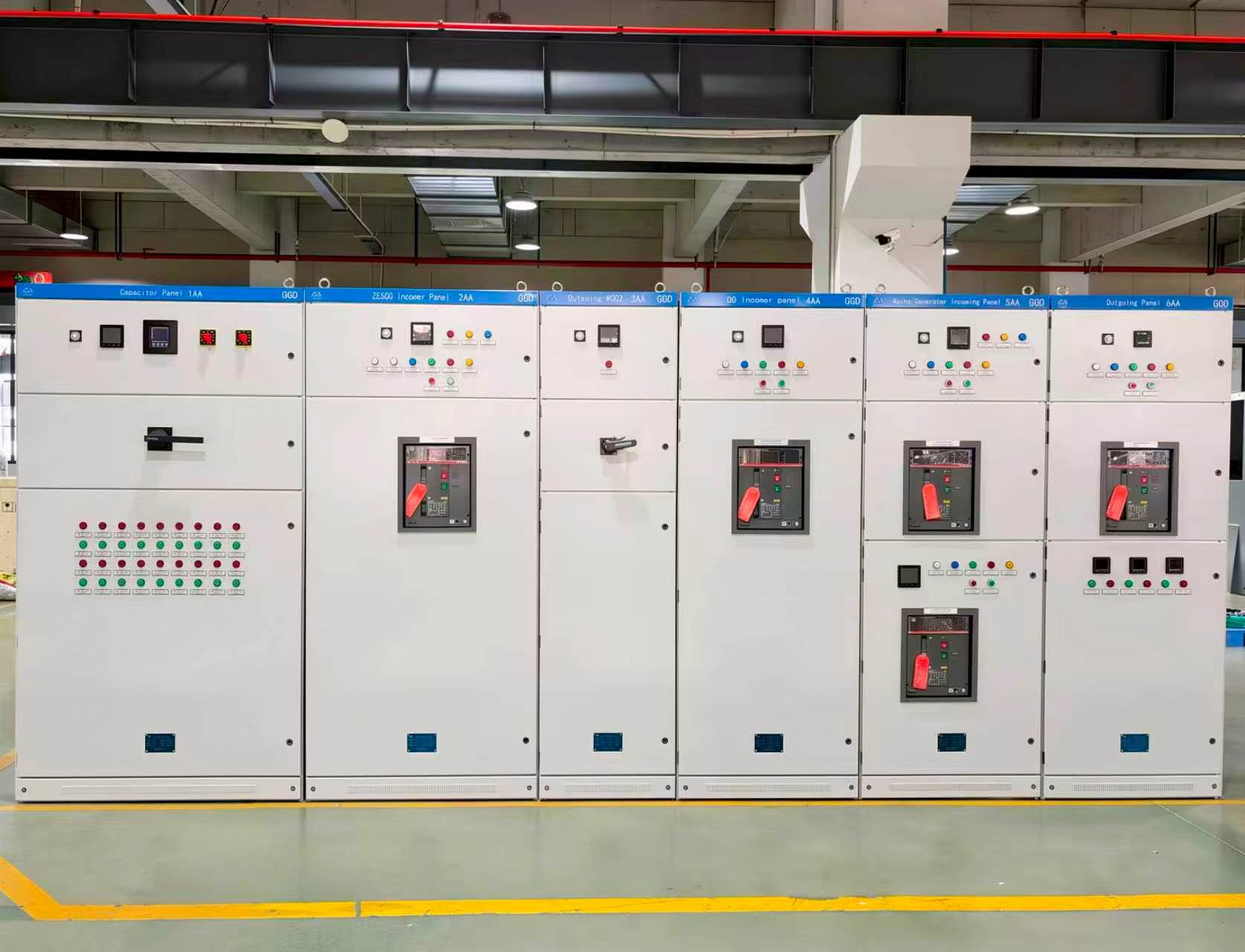
An RMU is a compact, sealed, gas-insulated switching asset designed to connect two cable loops in a ring distribution network and isolate a fault on either loop without breaking the ring. Switchgear is a broader category that includes the protection breakers, disconnectors, and busbars that protect and control the network, including the fault-current interruption that an RMU does not carry. The two are not interchangeable: an RMU carries the ring-network switching and the load-switch function, while switchgear carries the fault-clearing and the network protection function.
The single most under-appreciated variable in real urban distribution planning:the assumption that an RMU and a switchgear panel are substitutes. They are not. A network that runs RMUs at the ring nodes where the protection is provided upstream at the Substation Switchgear is a network that works. A network that runs RMUs at the ring nodes where the protection is not provided upstream is a network that fails the fault-clearing expectation.
2. The Voltage Class Difference
Most urban distribution networks operate at 12 kV, 24 kV, or 36 kV medium voltage, and the right asset is the one rated for the network's voltage class with the appropriate insulation level for the altitude and the environmental exposure. The IEC 62271 series anchors the rating framework, with IEC publishing the standard, and CIGRÉpublishing the broader Power System reference framework that the right program aligns with.
3. The Fault-Current Rating Difference
An RMU's short-circuit rating has to exceed the network's prospective fault current by an appropriate margin, but the RMU is not designed to interrupt the fault — the upstream switchgear is. A switchgear panel's short-circuit rating has to exceed the network's prospective fault current by the larger margin that allows the panel to interrupt the fault. The right program scopes the fault-current rating against the network's prospective fault current at the specific node site, not against a generic network figure.
4. The Footprint Difference
An RMU has a smaller footprint than a switchgear panel, and the right footprint is the footprint that fits the urban site's available space. Most urban residential and light-commercial node sites have limited footprint, and the RMU's compact form factor is the right answer. Most substation feeder sites have larger footprint, and the switchgear panel's larger form factor is the right answer. The right program carries a footprint comparison across the network's node sites, not just the most favorable site.
5. The Switching Operations Difference
An RMU is rated for a higher number of load-switch operations than a switchgear breaker, because the RMU carries the network's daily switching while the switchgear carries the network's fault-clearing. The right asset matches the operations to the rating: a network with heavy daily switching runs on RMUs with the load-switch rating; a network with rare daily switching runs on switchgear with the fault-clearing rating. The two are not interchangeable because the operating cycles are different.
6. The Cost per Functional Unit Difference
An RMU has a lower per-unit cost than a switchgear panel, but a switchgear panel carries more functions per panel. The right cost comparison is the comparison against the architecture the network design requires, not the comparison against a single node site. A network that combines the two — RMUs at the ring nodes and switchgear at the substation feeder — has the lowest cost per functional unit and the right network performance.
| Difference | Ring Main Unit (RMU) | Switchgear Panel |
|---|---|---|
| Functional role | Connect two cable loops, isolate fault without breaking ring | Protect network, interrupt fault current, carry substation feeder |
| Voltage class | 12 kV, 24 kV typical | 12 kV to 36 kV typical; extends to HV at 40.5 kV and above |
| Fault-current rating | Short-circuit withstand (does not interrupt) | Short-circuit interrupting (clears the fault) |
| Footprint | Compact, sealed, low-footprint | Larger, more functions per panel |
| Daily operations | High-cycle load switching | Low-cycle fault clearing and protection switching |
| Cost per functional unit | Lower per unit; carries one function | Higher per unit; carries multiple functions |
Comparison of Functional Role and Operating Cycles
The functional difference between RMU and switchgear determines how each asset ages inside the network. A modern gas-insulated RMU typically carries a service life of 30 years or more under normal urban distribution duty, with periodic mechanism inspection every 5 to 10 years and gas-pressure monitoring at the intervals the manufacturer specifies. The right program pairs the RMU specification with the maintenance interval the utility's operations team can support. A switchgear breaker has a more variable service life because the breaker contacts wear under fault-clearing duty, and the right program scopes the breaker replacement against the network's expected fault profile rather than against the catalog rating.
When to Combine the Two
Most urban distribution networks combine the two — RMUs at the ring nodes for switching and isolation, switchgear at the substation feeder for fault clearing and protection. The combined architecture is more flexible than a single architecture, because the RMU carries the daily operations and the switchgear carries the fault response. The right program scopes the combined architecture against the network's protection philosophy and the node site's footprint.
The combined architecture is also the architecture that supports the expansion the urban network will see over the next 20 years. Modern modular RMUs can be expanded by adding additional function modules to the existing frame, typically one module at a time and with a planned power outage on the affected ring section. The right program scopes the expansion plan at the initial specification, because the modular frame is designed for the planned expansion rather than retrofitted after the fact.
What Standards Apply?
The right program references the IEC 62271 series for high-voltage switchgear and controlgear, which the IEC publishes. The IEEE C37 series covers the equivalent North American framework, which IEEE Standards publishes. The EN 62271 series covers the European framework, which BSI and the European standards bodies publish. CIGRÉ publishes the broader power system reference framework that the right program aligns with. UL covers the North American safety certification framework.
OSHA covers the workplace safety framework for the on-site installation and maintenance, and the EPA energy programs cover the broader environmental framework that the right program references. The IEA covers the international electricity and power distribution framework that the right program aligns with.
How Does Tianan Run the Program Against This Framework?
Tianan produces the HV and MV switchgear range on a Ningbo manufacturing footprint, with the XGN-12(24) indoor gas-insulated metal-enclosed switchgear and the related ring-network switchgear panel family designed for the urban distribution network architecture described in this article. The HV and MV switchgear range covers the standard catalog; the XGN/XGTD6-12(24) product page covers the medium-voltage ring-network tier. The contact page is where a planning engineer who is building or reviewing an urban distribution network starts the conversation.
The framework in this article is the framework Tianan runs against every urban distribution program — the right function, the right voltage class, the right fault-current rating, the right footprint, the right switching operations, and the right cost per functional unit. The program that locks all six against the network's specification is the program that delivers the architecture the urban distribution network requires.
How to Specify an RMU or Switchgear Panel Against This Framework
A practical specification ties every difference in this article back to a verifiable number on the asset's nameplate, the asset's type-test report, and the asset's factory acceptance record. The right program carries six specifications, the same six differences the framework already walks through, and the right procurement team is the procurement team that does not collapse any of the six into a single line on the purchase order.
Function. Specify the functional role explicitly. Write "ring-network switching and isolation, two cable loops per node, no fault-current interruption required" for the RMU, and "substation feeder protection, fault-current interruption required per IEC 62271-100" for the switchgear panel. The functional specification is the product call the protection philosophy locks against.
Voltage class. Specify the rated voltage, the rated short-duration power-frequency withstand voltage, and the rated lightning impulse withstand voltage, because the IEC 62271 series ties the dielectric performance to the network's overvoltage profile. The right program also specifies the altitude correction factor for the installation site, because altitude derates the insulation level the right program tests at sea level.
Fault-current rating. Specify both the short-time withstand current and the peak withstand current for the RMU, and the short-circuit breaking current for the switchgear panel. The right program requires the manufacturer's type-test certificate for the rating, because the network's prospective fault current at the node site is the value the right program matches against the rating.
Footprint. Specify the panel dimensions, the cable entry direction, and the required clearance envelope, because the right footprint is the footprint the urban site can accept. The right program also specifies the building's ventilation requirement and the foundation load, because both are part of the footprint the right program locks at the specification stage.
Switching operations. Specify the mechanical endurance class and the electrical endurance class, because the right asset matches the operating cycle the right program runs against the asset. The right program references IEEE C37 for the North American operating-cycle framework and BSI EN 62271 for the European operating-cycle framework.
Certification. Specify the third-party certification the destination market requires, because the right program locks the certification at the specification stage rather than at the shipment stage. The right program references UL for North American certification, IEC CB scheme for the international certification, and ISO 9001:2015 for the quality management system the right program aligns the supplier against.
The specification that locks the six against the network's protection philosophy, the node site's footprint, and the destination market's certification framework is the specification that delivers an asset the network can run for the next 30 years. The right program pairs the specification with the factory acceptance test plan and the right on-site commissioning protocol, because the right asset is the asset the right program verifies against the specification it was written to.
Frequently Asked Questions
What is the difference between a ring main unit and switchgear?
A ring main unit (RMU) is a compact, sealed, gas-insulated switching asset designed to connect two cable loops in a ring distribution network and isolate a fault on either loop without breaking the ring. Switchgear is a broader category that includes the protection breakers, disconnectors, and busbars that protect and control the network, including the fault-current interruption that an RMU does not carry. The two are not interchangeable: an RMU carries the ring-network switching and the load-switch function, while switchgear carries the fault-clearing and the network protection function. Many urban distribution networks combine the two — RMUs at the ring nodes, switchgear at the substation feeder.
When is an RMU the right answer for an urban distribution network?
An RMU is the right answer when the urban network has a clear ring topology, when the node sites have limited footprint, when the daily switching operations are limited to load transfer rather than fault clearing, and when the network's protection is provided upstream at the substation switchgear rather than at the node site. Most urban residential and light-commercial distribution networks fit this profile and run on RMUs at the ring nodes.
When is switchgear the right answer instead of an RMU?
Switchgear is the right answer when the urban network carries industrial loads with high fault-current contribution, when the node site needs local protection rather than relying on upstream protection, when the site is a substation feeder rather than a ring node, and when the daily switching operations include fault-clearing rather than only load transfer. Heavy-industrial and high-rise distribution networks usually fit this profile and run on switchgear at the critical node sites.
What standards apply to RMUs and switchgear?
The right program references the IEC 62271 series for high-voltage switchgear and controlgear, which the IEC publishes. The IEEE C37 series covers the equivalent North American framework, which IEEE Standards publishes. The EN 62271 series covers the European framework. CIGRÉ publishes the broader power system reference framework that the right program aligns with.
Can an RMU and a switchgear panel be combined in the same substation?
Yes, and most urban distribution networks combine the two — RMUs at the ring nodes for switching and isolation, switchgear at the substation feeder for fault clearing and protection. The combined architecture is more flexible than a single architecture, because the RMU carries the daily operations and the switchgear carries the fault response. The right program scopes the combined architecture against the network's protection philosophy and the node site's footprint.
What is the typical lifespan of an RMU?
A modern gas-insulated RMU typically carries a service life of 30 years or more under normal urban distribution duty, with periodic mechanism inspection every 5 to 10 years and gas-pressure monitoring at the intervals the manufacturer specifies. The right program pairs the RMU specification with the maintenance interval the utility's operations team can support.
What is the difference between gas-insulated and air-insulated switchgear?
Gas-insulated switchgear (GIS) uses sulfur hexafluoride (SF6) or alternative gas as the insulating medium, which allows a much smaller footprint and a sealed, low-maintenance design. Air-insulated switchgear (AIS) uses ambient air as the insulating medium, which has a larger footprint and a higher-maintenance design but a lower environmental footprint in the gas-handling layer. The right choice depends on the urban site's footprint constraints, the environmental framework the operator supports, and the maintenance profile the operator runs.
Can an RMU be expanded after installation?
Modern modular RMUs can be expanded by adding additional function modules to the existing frame, typically one module at a time and with a planned power outage on the affected ring section. The right program scopes the expansion plan at the initial specification, because the modular frame is designed for the planned expansion rather than retrofitted after the fact.
Designing an urban distribution network?
Send us the network topology, the node site footprints, and the protection philosophy. We will return a written asset recommendation and a cost comparison.