
0102030405
Trailer-Mounted vs Skid-Mounted vs Containerized Substations: Mobility, Civil Works and Cost Compared
2026-09-11
TL;DR — Mobile Substation Configuration Comparison
- Mobile substations split into three families: trailer-mounted (full road mobility, no civil works), skid-mounted (lift-and-tow, light pad only), and containerized (ISO 20ft/40ft for multimodal shipping) — each wins on a different deployment scenario.
- The deciding factor is rarely unit cost — it is site civil works: trailer-mounted needs zero foundations, skid-mounted needs a leveled pad, containerized can sit on any flat surface that fits the ISO footprint.
- Trailer-mounted caps at roughly 25–30 MVA in the typical 40-tonne road-permit envelope used in most jurisdictions; skid-mounted and containerized can exceed 60 MVA because they are not bound by axle-load limits.
- For emergency restoration, trailer-mounted is the industry default because it tows with a standard heavy truck and energizes within 24 hours of arrival — skid and container units need a crane, adding 1–3 days.
- For international export, containerized (ISO 20ft/40ft) wins on multimodal logistics — sea, road, and rail without repackaging; trailer-mounted uses RoRo shipping; skid-mounted typically ships on flat-rack containers with crane offload.
Three mobile substation configurations ship to most utility and infrastructure projects today, and the choice between them is rarely a unit-price decision — it is a site-civil-works and shipping-logistics decision, because the configuration you choose determines whether the substation needs foundations, a crane, road permits, and whether it can ship internationally without repackaging. In our export projects across Asia, Africa, the Middle East, and South America, we have shipped every configuration in this guide at least once, and the projects that finish fastest are the ones where the buyer names the configuration before signing the purchase order.
The three configurations are trailer-mounted (built on a road-legal trailer chassis, towable by a standard heavy truck, zero foundation), skid-mounted (built on a structural steel skid, lifted by crane at site, requires a leveled pad), and containerized (housed inside a standard ISO 20ft or 40ft container, ships by sea, road, and rail with no repackaging). In this guide I will compare them across five engineering dimensions — mobility, site civil works, MVA capacity, deployment time, and 10-year total cost of ownership — and finish with an 8-item specification checklist you can attach to your next RFQ.

What Are the Three Mobile Substation Families?
Before comparing the three configurations, it helps to fix what each family actually is on the production floor. Because the three families look superficially similar from outside a delivery truck, the buyer who does not name the family up front usually ends up with a hybrid that costs more than any pure configuration would.
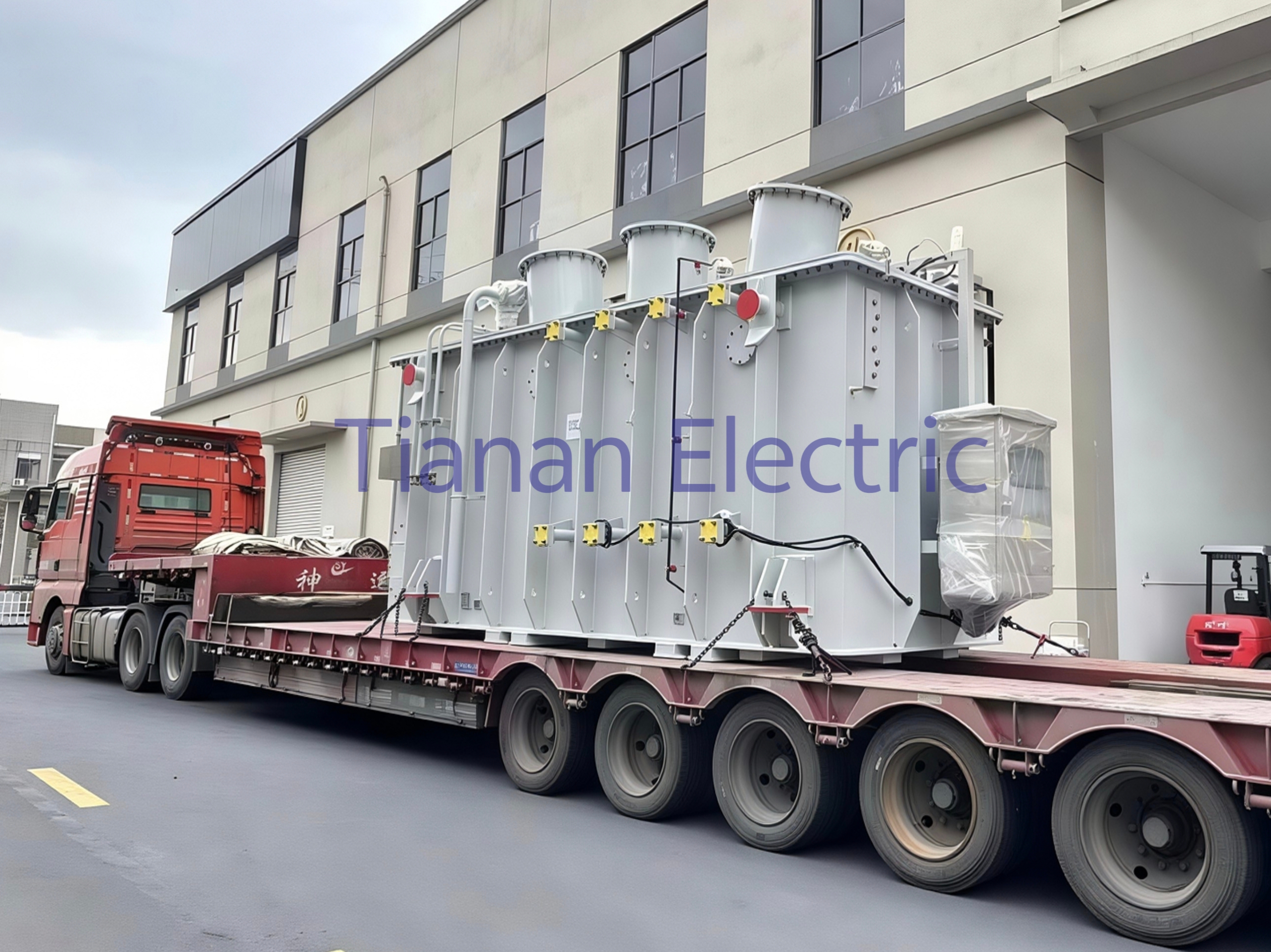
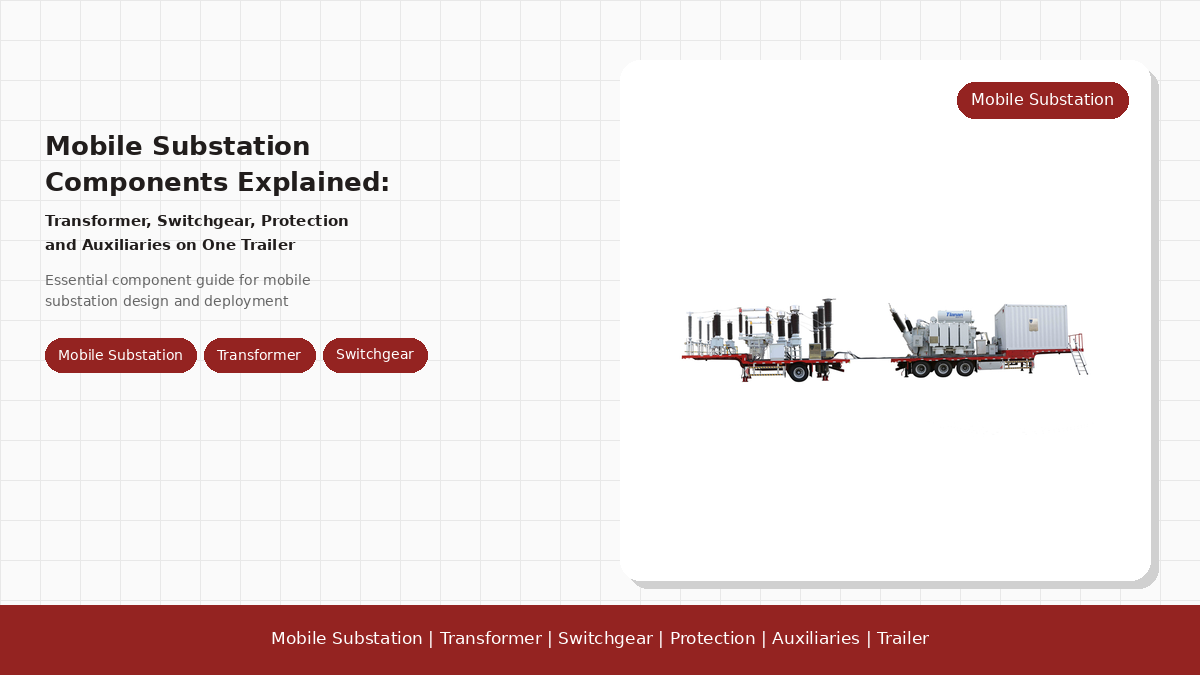
- Trailer-mounted (vehicle-mounted) mobile substation. The HV switch chamber, the main transformer, and the LV switch chamber are mounted on a road-legal semi-trailer or split across two semi-trailers. Shock-absorption mats sit between the equipment and the trailer bed, and flexible connectors join the primary circuit so the unit survives road vibration. The trailer is road-towable at standard highway speeds.
- Skid-mounted mobile substation.The HV equipment, transformer, and Lv Switchgear are mounted on a single structural steel skid (or split across two skids). The skid is lifted by crane at the port and at site, then set on a leveled gravel or concrete pad. Skid units are not designed for repeated road transport without refurbishment.
- Containerized mobile substation. All HV, transformer, and LV equipment is housed inside a standard ISO 20ft or 40ft intermodal container. The container shell is reinforced for the added weight, ventilation is upgraded, and the HV and LV cable entries are typically routed through the container floor or side wall with gland plates.
Each family is best understood by what it cannot do, not what it can. A trailer-mounted unit cannot easily exceed 25–30 MVA without exceeding road axle-load limits. A skid-mounted unit cannot be redeployed quickly without a crane on standby at the destination. A containerized unit cannot be deployed without a flat hard surface that fits the ISO footprint.
Key answer: Choose the configuration by its constraint, not its capability. The configuration that solves the binding constraint (MVA rating, civil works, shipping mode) is the right one.
Mobility Comparison: Trailer vs Skid vs Containerized
Mobility is the most visible difference between the three configurations, and it is the dimension most buyers get wrong on the first RFQ. The reason is that “mobility” in this context has three distinct meanings: redeployment speed, road-towability, and international shipping compatibility — and the three configurations win on different ones.
| Dimension | Trailer-mounted | Skid-mounted | Containerized |
|---|---|---|---|
| Typical MVA range | 0.5–30 MVA | 1–60+ MVA | 1–60+ MVA |
| Typical HV class | Up to 145 kV | Up to 145 kV | Up to 145 kV |
| Site civil works required | None (parking pad only) | Leveled gravel pad | Level hard surface, ISO footprint |
| Deployment time (arrival to energization) | Typically <24 hours | 1–3 days (crane offload + cabling) | 1–3 days (crane offload + cabling) |
| International shipping | RoRo ocean freight | Flat-rack container | Standard ISO 20ft/40ft container |
| Offload equipment needed at site | None (tow truck only) | Crane 30–100 t | Crane 30–100 t |
| Redeployment cadence | Multiple times per year | Once every 2–5 years | Once every 2–5 years |
| Service life (with maintenance) | 25–30 years | 25–30 years | 25–30 years |
The 24-hour deployment number on a trailer-mounted unit is worth dwelling on. Because the trailer is road-towable, it can be moved by any heavy-truck operator, and the only on-site work is HV and LV cable termination — typically a 4-8 hour job for a two-person crew. Skid and container configurations need a heavy-lift crane at site, which usually means a 1-3 day booking window plus a leveled pad that takes another 2-7 days to prepare.
Civil Works Comparison: Foundations and Site Preparation
Site civil works is the line item that decides the project budget more often than the unit price does. Because a foundation pad for a 25 Mva Transformer can run from a low-five-figure to a mid-six-figure number depending on soil conditions, the configuration that eliminates foundations can save more than the price difference between the three substation families.
For trailer-mounted units, the site requirement is essentially a parking pad with HV and LV cable terminations. No reinforced foundation, no oil containment bund (in many jurisdictions the trailer-mounted configuration is treated as a vehicle rather than a fixed installation, which simplifies environmental compliance). For skid-mounted units, the site needs a leveled gravel or concrete pad sized to the skid footprint, typically 6 m × 2.5 m for a single-skid 25 MVA unit, plus cable terminations and an oil containment bund if required. For containerized units, the site needs a level hard surface that fits the ISO 20ft (6 m × 2.4 m) or 40ft (12 m × 2.4 m) footprint, with adequate ventilation clearance around the container sides.
When the site is in a remote area with no prepared foundations — which is most emergency and rural-electrification projects — the trailer-mounted configuration is the only practical option. This is why most utility emergency-restoration fleets worldwide run trailer-mounted, not skid or container.
Total Cost of Ownership: The 10-Year Comparison
Unit price is the easiest line item to compare and the worst one to optimize on. The total cost of ownership over a 10-year horizon is what actually matters, and on that metric the three configurations swap positions several times depending on the deployment scenario.
For an emergency-restoration fleet deployed to 8–12 incidents per year across a 10-year horizon, the trailer-mounted configuration wins on TCO because the redeployment cost is essentially zero (tow truck plus cable crew) while the alternative configurations would need a crane at every incident. Because a single heavy-lift crane mobilization typically runs into the mid-five-figure range, the trailer saves a mid-six-figure number over the 10-year horizon on the redeployment line alone.
For a permanent installation on a temporary permit (the common case in mining and oil and gas), the skid-mounted configuration typically wins on TCO because the lower unit price (no trailer chassis, no road-permit engineering) more than offsets the higher redeployment cost when the unit eventually moves once every 3–5 years.
For an international project shipping by sea and then overland by truck or rail, the containerized configuration typically wins on TCO because the sea freight per MVA is the lowest of the three (standard container rates), the inland logistics does not require a heavy-lift permit, and the unit can be redeployed to a second site without repackaging.
Decision aid: Calculate TCO at the deployment cadence you actually expect, not the cadence you wish for. A trailer-mounted unit that relocates twice a year wins; the same unit sitting in one place for 10 years loses to a cheaper skid-mounted alternative on cumulative cost.
Which Configuration Suits Which Project?
The decision matrix below summarizes the configuration choice by project type. Because the wrong configuration adds 1-4 weeks to a project timeline through permitting, crane mobilization, or repackaging, the matrix is worth referencing before signing the purchase order.
- Utility emergency-restoration fleet. Choose trailer-mounted. Response time wins; redeployment frequency is high.
- Mine or oil-and-gas site, single location, 5–10 year horizon. Choose skid-mounted. Lower unit price; redeployment cost amortized over a long stay.
- Rural electrification project, international shipping required. Choose containerized. Multimodal logistics without repackaging.
- Construction site power, 1–3 year horizon, frequent relocation. Choose trailer-mounted. Zero foundation, fast redeploy.
- Temporary power for a planned event, 6–24 month horizon. Choose containerized or skid-mounted depending on site access.
- Disaster response pre-positioned stock. Choose trailer-mounted. Pre-staging on a ready-to-tow chassis cuts response time to hours.
Browse our full trailer-mounted mobile substation solutions range, or read our vehicle-mounted mobile substation factory overview for the technical envelope on each chassis. If your project fits one of the matrix rows above, send us the deployment scenario and we will recommend the right configuration in the same RFQ reply.
The 8-Item Mobile Substation Specification Checklist
Below is the specification checklist our engineering team uses on every mobile substation RFQ. Each item is mandatory because missing any one of them forces the factory to default to a configuration that may not match the deployment scenario.
- MVA rating with continuous and overload (typically 110% for 1 hour) duty. State the cooling class (ONAN, ONAF, or AF for dry-type).
- HV voltage class with BIL rating (for example 145 kV class with 650 kV BIL).
- LV voltage class with BIL rating (for example 0.4 kV class with 10 kV BIL).
- Frequency (50 Hz or 60 Hz) and vector group (for example Dyn11 for distribution).
- Impedance (typically 6–12% for distribution transformers; higher for special impedance projects).
- IP rating for the enclosure (typically IP54 for outdoor mobile equipment, IP44 for indoor).
- Cooling class and oil type (mineral oil, ester fluid, or dry-type) and the maximum ambient temperature at site.
- Certification list with the relevant IEC and IEEE standard numbers — the baseline is IEC 62271-202 on the assembly plus the relevant transformer and switchgear standards.
Frequently Asked Questions About Mobile Substation Configurations
What is the typical delivery lead time for trailer-mounted, skid-mounted, and containerized substations?
Typical ex-works delivery lead times run 60–90 working days for skid-mounted and containerized configurations on standard ratings, and 90–150 working days for trailer-mounted configurations because the trailer chassis, braking system, and road-permit engineering add 3–6 weeks to the schedule. Add roughly 30–45 working days for international ocean freight on containerized units and 20–30 working days for RoRo shipping on trailer-mounted units.
Can a trailer-mounted substation handle the same MVA rating as a skid-mounted or containerized unit?
Trailer-mounted units cap out at roughly 25–30 MVA in the typical 40-tonne road-permit envelope used in most jurisdictions. Skid-mounted and containerized configurations can exceed 60 MVA because they are not bound by road transport axle-load limits. For projects above 30 MVA, skid-mounted or containerized is usually the right choice.
Which configuration is best for emergency or disaster restoration use?
Trailer-mounted is the standard for emergency restoration because it can be towed by a standard heavy truck, deployed to a cleared site without civil works, and energized within 24 hours of arrival. Skid-mounted and containerized configurations need a crane or heavy forklift to offload at site, which adds 1–3 days to the deployment timeline — usually unacceptable for true emergency response.
What certifications should a mobile substation carry for international export?
The baseline is IEC 62271-202 for the prefabricated substation assembly, plus the relevant transformer standard (typically IEC 60076 for oil-immersed or IEC 60076-11 for dry-type) and the relevant switchgear standard (IEC 62271-200 for metal-clad, IEC 62271-203 for gas-insulated). For projects shipping to North America, the buyer usually also requires IEEE C57.12.00 on the transformer and IEEE 1613 on the protection and control cubicle.
How are mobile substations shipped internationally?
Containerized units ship as standard ISO 20ft or 40ft sea freight with no special handling, and can transfer to road or rail without repackaging. Trailer-mounted units typically use Roll-on/Roll-off (RoRo) ocean freight and require heavy-duty tow trucks at both port and site. Skid-mounted units are usually lashed onto flat-rack containers for sea freight and lifted off at site by crane.
What is the typical service life of a mobile substation?
A well-maintained mobile substation delivers 25–30 years of service. The transformer is usually the life-limiting component (oil-immersed units need oil testing and reconditioning at 10–15 year intervals), while the trailer or skid chassis and the switchgear typically outlast the transformer. Trailer chassis in coastal or high-humidity environments may need frame refurbishment at 15–20 years.
Key Takeaways
- Trailer-mounted, skid-mounted, and containerized are three distinct mobile substation families — not variants of the same product.
- Choose by deployment cadence, civil works, MVA rating, and shipping mode — not by unit price.
- Above 30 MVA, choose skid-mounted or containerized because trailer road-permit envelopes cap the practical rating.
- Trailer-mounted is the industry default for emergency restoration because of <24-hour deployment.
- Containerized is the right choice for international shipping in standard ISO 20ft/40ft.
Compare Configurations With Our Team
Send us the deployment scenario, MVA rating, target voltage, and destination port. Our engineering team will return a configuration recommendation and a fixed quote within 5 working days.
Compare Configurations With Our Team